Gov. Bob Ferguson moves to prepare Washington for looming Medicaid changes
Published in News & Features
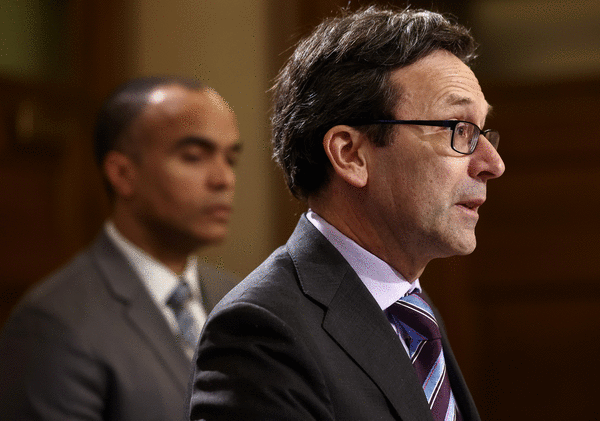
SEATTLE — Major changes to Medicaid coverage will land in Washington as soon as next month, pushing the state's top public officials and health leaders on Thursday to announce a plan to try to soften the blow of the coming losses.
In an executive order signed at a Seattle community clinic, Gov. Bob Ferguson promised to bring state hospital and healthcare agencies together to stay on top of possible barriers and disruptions to coverage and to spread awareness about impacts of House Resolution 1, the so-called One Big Beautiful Bill."
"In the richest country in the world, the president is kicking the most vulnerable people off their health coverage," Ferguson said at the news conference at International Community Health Services. "HR 1 is truly devastating for our healthcare system."
President Donald Trump's federal budget bill, passed by Congress last year, cuts more than $1.3 trillion in healthcare and food assistance nationwide, and includes "very, very significant" effects to Washington state, the governor said. On Oct. 1, initially about 14,000 lawful immigrants were set to lose coverage with Apple Health, the state's Medicaid program. In addition, more than 600,000 Washington residents will be subject to new work requirements at the start of 2027, and required to reapply for coverage twice as frequently.
"The federal government's changes are all designed for one purpose," Ferguson said. "It is thinly veiled: to kick people off Medicaid."
The state has helped about 3,000 lawful immigrants update their information so they can keep their coverage, he said. Under the executive order, the state Department of Health is also tasked with building an online hub that helps track eligibility and renew coverage. The verification tool should allow about 400,000 residents to keep their coverage, Ferguson said.
Still, that leaves more than 200,000 Washingtonians who are estimated to lose their Apple Health coverage by the end of 2027, as a direct result of federal budget cuts, according to Ferguson's office.
When people lose health insurance, they're more likely to delay care and end up in the emergency room, which becomes more expensive for hospitals and the overall healthcare system, state insurance leaders said during the news conference.
Nearly 2 million lower-income Washington residents are enrolled in Apple Health, which is funded by the state and the federal government.
People with private insurance will also see higher costs, said state Insurance Commissioner Patty Kuderer. Those who buy their own coverage through the Washington Health Benefit Exchange, including more than 250,000 residents who don't have insurance through their jobs and who aren't eligible for public programs, will continue to experience "major sticker shock," Kuderer said.
After Congress' decision last year to let health subsidies expire, she said, about 40,000 fewer people enrolled in individual health plans through the state benefit exchange for 2026, a decline of 13%.
"That's the largest drop in enrollment since the exchange began in 2013," Kuderer said.
Next week, she added, her office will announce the final rates for 2027.
"I truly wish I had better news," she said. "States have always been the incubators of change, and that's still true today."
Along with patients, the state's community health clinics and rural hospitals will likely see similar financial blows due to HR 1.
At International Community Health Services, for example, nearly 55% of patients rely on Apple Health, said Kelli Nomura, CEO of the clinic housed in Seattle's Chinatown International District. If clinic patients lose coverage, that won't mean they stop needing care — it just means the clinic will no longer get reimbursed for their medical services.
"Community health centers across Washington and the country keep costs down," Nomura said. "We provide healthcare that helps keep people healthy (and) out of emergency rooms."
Another part of Ferguson's order includes the creation of an HR 1 response committee, made up of state healthcare agencies, including the office of the insurance commissioner and the health benefit exchange. The group will work on developing a proposal for strategies to help people hold on to their health coverage and keep costs down, Ferguson said.
He urged Washingtonians with Apple Health coverage to make sure their information is up-to-date and to look out for letters from the state to avoid losing insurance.
"Communicate with those who are your loved ones, your friends, your workers," Ferguson said. "Make them aware of these truly draconian changes and cuts that are coming our way.
© 2026 The Seattle Times. Visit www.seattletimes.com. Distributed by Tribune Content Agency, LLC.






Comments