After legal win, Miami Dade College goes after judge in Trump library case
Published in News & Features
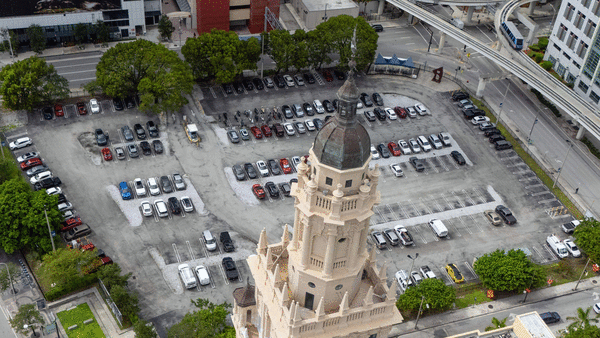
MIAMI — Miami Dade College is trying to disqualify a judge who already ruled in its favor from any future proceedings in a public transparency lawsuit over the College Board of Trustees’ decision-making process to give away prime downtown land for Donald Trump’s presidential library.
Even though Miami-Dade Circuit Judge Mavel Ruiz tossed out her initial block on the college transferring the land for the project, there’s been ongoing legal squabble over whether historian and activist Marvin Dunn — who filed the lawsuit against the college in October — could still modify his legal challenge and potentially draw out proceedings.
In response, the college is now going after Ruiz, accusing her of holding Dunn in “high esteem” and harboring “personal bias in his favor.”
“The College believes it will not have a fair trial if Judge Ruiz continues to preside over this action,” the college’s attorneys wrote in a filing seeking to disqualify her from the case last week.
Dunn first sued the trustees last fall, accusing them of skirting Florida’s public transparency laws when they voted to give away the Biscayne Boulevard property after a brief September meeting with no debate, public comment or discussion of the plans for the property. Ruiz initially ruled that his case was likely to succeed and temporarily blocked the college from transferring the land.
In December, the college held a new, publicly noticed vote — this time after hours of public feedback — and again voted to transfer the land to a state board that plans to give it to Trump’s presidential library foundation. Afterward, Ruiz reversed her block on the land transfer and dismissed the case.
But the college’s new legal swing against Ruiz comes as the college and Dunn’s attorneys fight over whether Dunn’s lawsuit is dismissed with or without “prejudice,” a legal distinction that would determine how easy it is for Dunn to press forward with the case.
Dunn’s attorney, Andres Rivero, told the Miami Herald that Dunn would have to appeal the ruling in higher court if the case is dismissed with prejudice. If it’s dismissed without prejudice, as he’s seeking, Dunn could amend his initial complaint and potentially continue the legal battle in Circuit Court.
Dunn said he’s seeking the latter option in hopes of forcing a discovery process to “find out what really happened” and uncover how the college decided on the land deal ahead of the first vote, even if it doesn’t stop the presidential library project from moving ahead.
The college argued throughout the proceedings that it was not required under Florida’s Sunshine Law to provide the specifics of what would be discussed at a meeting, only the fact that a meeting was happening. Open government advocates said that interpretation — backed by Florida Attorney General James Uthmeier — could set a dangerous precedent for the future of public access to government proceedings.
Trump’s library foundation has said it plans to build a high-rise on the property and told the IRS it plans to raise almost a billion dollars for the project while Trump is still in office. Real estate experts have called the property a developer’s dream.
The college has considered development proposals for the downtown land — which it’s currently using as a parking lot — twice before. During 2016 negotiations, the college had requested a cultural center, $20 million in cash and a portion of condo sales before the deal eventually fell apart.
This time around, neither the college nor Trump’s presidential library foundation has announced any specific provisions or benefits for the college in exchange for its land.
_____
©2026 Miami Herald. Visit miamiherald.com. Distributed by Tribune Content Agency, LLC.






Comments