Venezuela starts shutting oil wells as US blockade halts flows
Published in News & Features
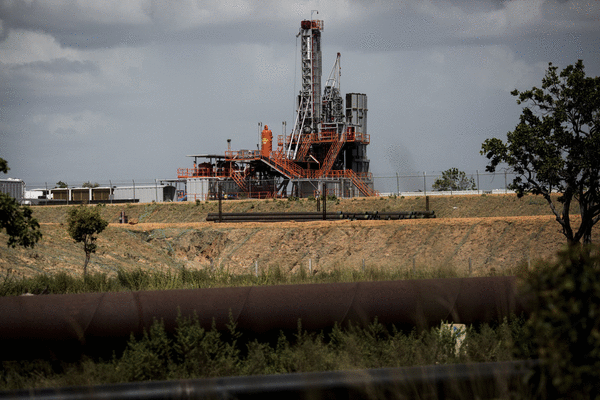
Venezuela started shutting wells in a region that holds the world’s largest deposits of oil in the face of a blockade by the Trump administration meant to financially squeeze the nation.
Petroleos de Venezuela SA began shuttering wells in the Orinoco Belt on Dec. 28 as the state-run refiner ran out of storage space and inventory swelled, according to two people familiar with the matter who asked not to be identified discussing internal matters. PDVSA aims to reduce Orinoco Belt production by at least 25% to 500,000 barrels a day, the people said. The decrease represents a 15% cut of Venezuela’s overall output of 1.1 million barrels a day.
The decision signals a reality check for Venezuelan President Nicolas Maduro, who throughout the blockade has attempted to maintain exports that are at the core of the South American country’s economy. Disabling wells is seen as a last resort because of the operational challenges and high costs to restart, one of the people said.
Representatives of the government and PDVSA did not immediately respond to requests for comment.
PDVSA on Dec. 23 signed off on the idea to decrease production starting Dec. 28, one of the people said. The plan is to shut wells in the most extra-heavy crude oil division of the Orinoco Belt, Junin, then move to the rest, Ayacucho and Carabobo, which hold less heavy oils.
China is Venezuela’s main oil buyer. The U.S. imposed sanctions against Venezuela in 2019 and this month U.S. President Donald Trump ordered a military blockade saying it was needed to stop drug cartels.
©2025 Bloomberg L.P. Visit bloomberg.com. Distributed by Tribune Content Agency, LLC.






Comments