Homeless couple's tragic death highlights risks of life on California streets
Published in News & Features
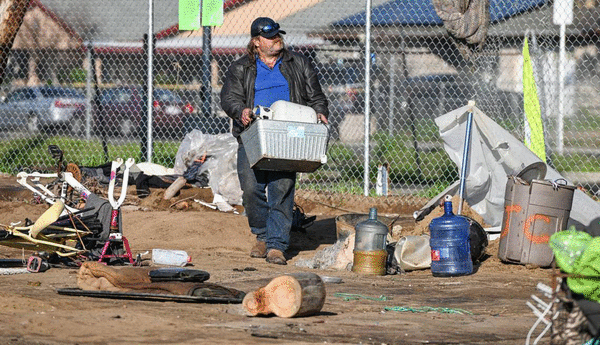
All they were trying to do was stay warm, friends and family said of the two unhoused individuals found dead in their tent in Fresno.
Fresno police responded to a call from an unhoused individual Friday afternoon at an encampment along the Highway 180 interchange at Abby Street, officials said. When they arrived, they found Denise Celis, 52, and Donald Wallace, 50, deceased in their tent.
The pair had a warming fire burning on an old kettle inside their tent in an apparent effort to stay warm, said California Highway Patrol Spokesperson Mike Salas. The central San Joaquin Valley has experienced an unseasonably cold winter and weeks of foggy weather due to an extra-rainy autumn. The night before the couple was found dead, temperatures dropped to 39 degrees in Fresno, according to the National Weather Service.
Based on a preliminary investigation, Celis and Wallace died of carbon monoxide poisoning, Salas said, though official causes of death are pending toxicology results from the Fresno County Coroner’s Office.
Friends and relatives of Celis and Wallace said the two regularly stayed at the encampment along the highway where they were found. The camp usually had around 20 or so people who sought a quiet, safe space away from the public and law enforcement, they said.
The encampment isn’t visible from the nearby highway or roads. That’s likely by design, homeless advocates said.
“People are always trying to find a place they can’t be spotted,” Bob McCloskey, a longtime homeless advocate, said in an interview with The Bee.
As of Monday afternoon, the encampment appeared to have been cleaned. There were only a few tents, including one with a dog, on the stretch of land nestled between the grassy knoll along the entrance to Highway 180 and a brick fence that lined an alley.
A pit in the ground outside one tent showed signs of a recent fire — the type popping up across the city as homeless people try to stay warm.
Encampments along highways or their embankments are illegal statewide, said Salas of CHP.
“Unfortunately, due to the cold whether we’ve been having, we do have more heating-type fires along these illegal encampments,” he said. “A tragic event happened because of it.”
Luis Altos, a friend of Celis and Wallace, said the couple let him stay in their tent and shared their food with him when he first came across the camp about a year ago after suffering a car accident and losing his housing.
“They were good people,” he said Monday afternoon as he tended to a memorial at their site where they were found. “They’d help out anybody,” he said. Altos regularly visited his friends at their camp and remembers them as a helpful, generous people. He said one of Wallace’s most prized possessions was his collection of keys that he had on a big key-ring akin to that of a janitor.
“He’d say ‘I have the keys to the city,’” Altos said. Wallace’s family is currently raising funds to cover the cost of cremation.
Another friend, Johnny Mounce, 51, said he was at the camp Friday and witnessed the coroners take his friends away.
He has been staying at the same encampment as his friends Celis and Wallace after getting kicked out of shelter housing along Parkway Drive about a week ago. Mounce said the encampment had been a gathering spot for years and was close to where Wallace’s family lived, which he regularly visited.
Wallace wasn’t the type to “gang-bang” or try to bully other homeless people for their belongings, Mounce said.
“He didn’t cause no problems,” Mounce said. “You leave him alone he’ll be alright. He’s mostly a happy-go-lucky guy.”
Mounce said the cold temperatures have been rough the past few days and that some people took the risk of building a warming fire inside a tent to stay warm. “They probably fell asleep,” he said.
“Cops want to come out here and harass us, take our belongings, throw us in jail. How is that really gonna help us? It’s not,” he said.
Advocates fear the city of Fresno’s anti-camping ordinance is pushing people into increasingly dangerous conditions and locations. The deaths are prompting more people to call for a more humane approach to homelessness in the region. They warn more accidents could happen as people try to stay warm in the cold-weather conditions.
“People need to think about this death as an awareness to the rest of the community of what’s happening out here,” Dez Martinez, homeless advocate and founder of We Are Not Invisible, said at the encampment along Highway 180.
Family visited unhoused sister ‘constantly’
Margarita Alvarez, the sister of Celis, said her sister had been living at the encampment “for a minute.”
One of Celis’s sons who has schizophrenia also camped nearby, she said. On Monday night, in an interview with The Bee, Alvarez said she was going out to look for him at the encampment to tell him the news.
Celis was a beloved sister, mother and grandmother, Alvarez said.
“This just traumatized them,” said of Celis’s death.
Alvarez said the family visited the encampment Sunday night for a vigil in her sister and Wallace’s honor.
Family members “constantly visit her our there,” Alvarez said. Or she’d get in touch with them when she needed something.
They made she sure she had food and blankets in the cold because she “refused” to stay with family, Alvarez said.
“She was a good mom, she just made a wrong turn in life,” Alvarez said. The family is raising funds for her final arrangements on GoFundMe.
“Denise was deeply loved and deserves to be remembered with dignity and respect,” her daughter-in-law Jessica said on GoFundMe.
Advocates call for more humane approach to homelessness
Advocates for the unhoused said these deaths were preventable and are urging city officials to take a more humane approach to homelessness. “These were just two individuals trying to stay warm,” Martinez said. “There should be no more deaths on the streets of Fresno.”
Over the past year, they’ve asked city officials to make city-run warming centers available beyond what current rules allow for. According to city policy, warming shelters open once temperatures drop below 34 degrees.
Advocates are also challenging the controversial city ordinance passed in 2024 that makes it a misdemeanor to sleep or camp in any pedestrian or vehicle entrance to public or private property along a public sidewalk, punishable by one year in jail or a $1,000 fine. Last week, a civil rights attorney filed a class action lawsuit against the city of Fresno alleging the homeless community has been criminalized and unduly prosecuted after the city adopted its controversial anti-camping ordinance.
McCloskey, sent he sent a letter via email to city officials saying the deaths “could have been avoided if the city had opened its warming shelters.”
”The city’s policy to only open warming centers at 34 degrees or less is cruel, inhumane, and will cause immense suffering and more deaths from accidents and hypothermia,” he said in an email to Mayor Jerry Dyer and Fresno council members.
City officials didn’t immediately respond to a request for comment on the deaths or the push for expanded warming center hour on Monday.
But Councilmember Miguel Arias said in an email response shared with The Bee there were some services available.
“It’s important to note that the unfortunate deaths you referenced occurred when the Rescue Mission warming shelters were open and had sufficient capacity to accommodate them,” he said.
_____
©2025 The Fresno Bee. Visit fresnobee.com. Distributed by Tribune Content Agency, LLC.






Comments