Nvidia's Huang urges G20 to speed AI adoption, spur growth
Published in Business News
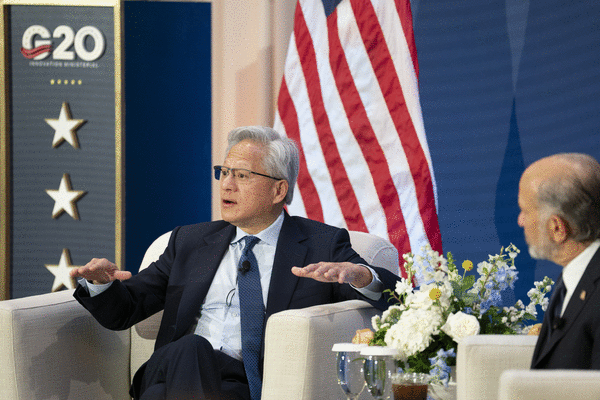
Nvidia Corp. Chief Executive Officer Jensen Huang called on Group of 20 nations to accelerate their adoption of artificial intelligence as a way to enhance growth, urging the world’s largest economies to expand data centers and other infrastructure to support the emerging technology.
“Every single country needs to build infrastructure so you can support your own local economy,” Huang said Wednesday at a tech event in North Carolina hosted by the U.S. for G20 members. The Nvidia chief, whose company is at the heart of the AI boom, likened the technology to water, electricity and other utilities. “This is the great equalizer.”
Huang spoke during a fireside chat with U.S. Commerce Secretary Howard Lutnick at the event, where Trump administration officials are pressing G20 members to adopt a set of guidelines for overseeing new technologies like AI. Dubbed the Carolina Principles, the document cautions nations against creating new regulatory bodies for AI while urging closer collaboration between governments and private industry to test emerging technologies.
G20 delegates gathered in North Carolina this week against the backdrop of growing public opposition in the U.S. to data center construction that’s emerged a central issue in the November midterm elections. At the same time, a spate of security breaches, where AI models escaped secure testing environments, has fueled global calls for stricter oversight to ensure the safety of cutting-edge systems.
In his remarks, Huang said that the “single worst outcome” for a country is “being left behind.” The Nvidia chief warned that could happen if the public and policymakers let fears about AI drive the conversation about the technology. “We have to make sure that we are balanced in talking about it,” he said, and focus on AI’s potential for boosting prosperity.
Huang held out the U.S. as an example, saying Nvidia would “invest close to a trillion dollars into the United States infrastructure” over the course of “this year alone” because of the country’s regulatory environment and pro-energy policy.
Nvidia, the world’s most valuable company, is the leading provider of AI accelerators, a key component for training and running artificial intelligence models. Last week the chipmaker projected sales growth of 70% for the next fiscal year, sending its shares on their biggest one-day rally since April 2025.
In remarks to reporters, Huang also recommended that governments adopt narrow regulations for AI, saying that the responsibility for ensuring product safety should fall to companies rather than public officials.
“The technology is in its formative stages, and the advice that I would have is to regulate practical and actual harm, and not regulate theoretical and hypothetical harm,” Huang said after the fireside chat. “Every single company has to take it upon themselves to develop the technology safely.”
Other top tech executives have joined the two-day event to make similar calls for unfettered development of AI. On Tuesday, SpaceX CEO Elon Musk, whose ventures have made an all-in bet on the technology, accused the European Union of “extraordinarily high” regulations that stifle growth and urged a hands-off approach to new ventures.
Even Anthropic PBC co-founder Tom Brown — who’s also chief compute officer of the AI model developer that’s been outspoken about the need for safety guardrails — underscored the importance of fast-tracking data center construction globally.
In his own fireside chat with Lutnick on Wednesday, Brown told G20 representatives that they can reap the benefits of AI by clearing the way to build more tech infrastructure in their countries. He said he “really loved” President Donald Trump’s social media post earlier this week defending data center projects as a source of prosperity.
“It’s very clearly the bottleneck for all our progress,” Brown said. “We’re in a huge shortage of the power and labor needed to support the demand for AI.”
©2026 Bloomberg L.P. Visit bloomberg.com. Distributed by Tribune Content Agency, LLC.









Comments