Ford US sales drop 10% in August, as F-Series starts restock
Published in Business News
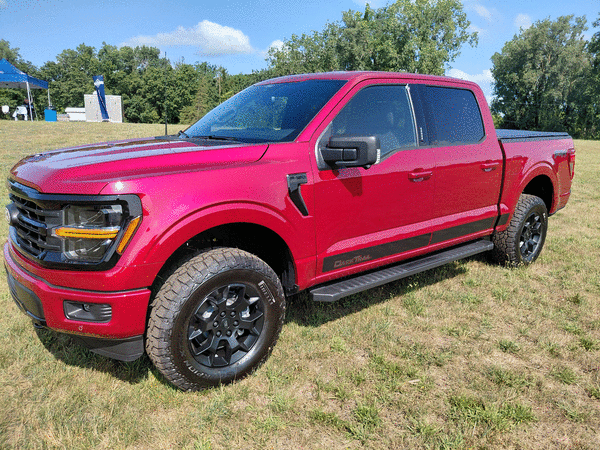
U.S. sales for Ford Motor Co. fell 10.3% year-over-year in August, but higher-margin retail share was slightly up, despite the discontinuation of the Escape and Lincoln Corsair crossovers to retool for next-generation electric vehicles.
The decline of total sales to 170,681 vehicles for the month was driven by decreases in the daily rental and fleet space. Total U.S. automotive sales were down around 6% across the industry, though last year's numbers included the Labor Day weekend, said Erich Merkle, Ford's U.S. sales analyst. Ford also is catching up on top-selling F-Series truck production after aluminum suppliers Novelis Inc.'s hot mill in Oswego, New York, came back online following multiple fires last fall.
"We're making bigger bets in the more profitability spaces of retail, and that's what's led to our gain in retail share year-over-year," Rob Kaffl, Ford director of U.S. sales and dealer relations, said during a phone briefing. "So despite losing all of that volume from a year ago on Escape, and of course there, we've made up that volume with growths, especially on the retail side on Maverick."
Maverick was up 14% year-over-year for a record August, including a 50% increase on its hybrid version. Ranger's nearly 19% increase was the largest of the Ford brand's models. F-Series fell 1.2% as truck production ramps up, but Super Duty was up 4%. Inventory remains less than 40 days of supply, Kaffl said, contributing to strong pricing on the trucks and the highest rates of turnover into customer hands since the COVID-19 pandemic-induced microchip shortage. But dealers should be restocking over the next few months with a target of a 50-60 days supply. Kaffl said the company doesn't want to return to 70-80 days of supply.
"We're going to take the dealers through our stock towers," he said. "They're lower than maybe they've expected back in the old days. But we have a healthy chain of in-transit and in-system."
That supply still should generate 30,000 to 35,000 F-Series sales per month, Kaffl said. He also expressed optimism on the truck's pricing holding at that level of supply with around 12 million F-Series owners. Ford's overall pricing was up $1,900 from a year ago, according to consumer data analytics firm JD Power.
"We think within the current ownership that we have today," Kaffl said "and obviously, the vehicle that continues to dominate the market, that we'll be able to protect that pricing with the current owner base coming back in to to get another new Ford."
Although Bronco was down 8.8%, it's having its best year to date. Bronco Sport increased 8.3%. Explorer fell 4%, and Expedition was down 11%. Mustang Mach-E declined almost 73%. The Transit commercial van was down 14%. Mustang was up almost 13%.
At the Lincoln luxury brand, sales fell 10% due to the discontinuation of the Corsair, which will return for the 2027 model year as an import from China. Otherwise, models were up: Nautilus led, increasing by 29%. Aviator followed at 22%, and Navigator grew close to 16%.
Kaffl also highlighted Ford's certified pre-owned program, Ford Blue Advantage, as topping Toyota and Honda for the past two months. Over the past year, about 300 dealers have joined, increasing participation to about 70% from the high 50s, he said, promoting the program's financing margin, service loyalty, coverage for Ford and non-Ford vehicles, and more aggressive interest rate offers.
It's an emphasis ahead of Ford launching five new affordable vehicles by the end of the decade, four of which will be U.S.-assembled
"We're excited, but we think there's more," Kaffl said. "We've talked about certified being our big affordability strategy as we transition to the end of the decade, bringing more affordability vehicles."
©2026 www.detroitnews.com. Visit at detroitnews.com. Distributed by Tribune Content Agency, LLC.









Comments