Washington's tribes boost state economic activity with casinos, businesses
Published in Business News
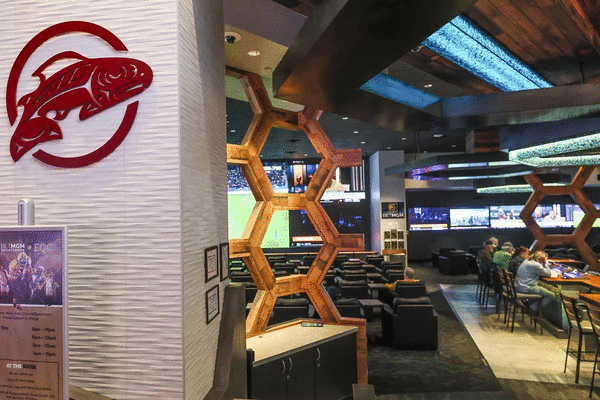
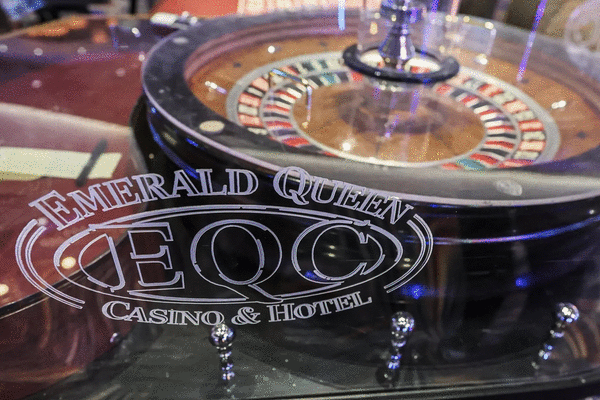


The scope of Washington's tribal economies is expanding its reach — and the tribes' reasoning is that's to the aid of all.
Tribes contributed $1 out of every $100 in the state's economy, according to a 2025 report on the economic and community benefits of tribes in Washington.
The report found that they generated at least $1.5 billion in total taxes in 2023. About $300 million went toward the state and $148 million toward local governments.
Over the past three decades, those tribal economies have expanded 59%.
Even though COVID-19 brought rapid closures to casinos and other fiscally critical tribal enterprises, tribal economies have bounced back and kept pace with the economic growth of the state since then," the report said.
It emphasized that all profit produced by tribal enterprises is considered government revenue. Those funds go toward public services for both Indigenous and non-Indigenous people, including schools, infrastructure and law enforcement, the report found.
Washington tribes collectively count as the state's eighth largest employer, with 61% of employees identifying as non-Native.
Rebecca George, executive director of the Washington Indian Gaming Association, estimates that only about half of tribes in the U.S. are considered "gambling tribes," including 22 out of 29 in the state.
However, George pointed to "an attack from commercial characters" on tribal gaming.
In Washington, commercial food and drink establishments can offer a limited list of gambling activities, including amusement games, bingo, raffles, pull tabs and card rooms, per the U.S. Securities and Exchange Commission. Card rooms, relegated to 15 tables, were first permitted in 1997.
One recent lawsuit that sought to challenge the Indian Gaming Regulatory Act was Washington-based casino gaming company Maverick Gaming v. United States and State of Washington. The state's tribal casinos scored a win in October when the U.S. Supreme Court decided against hearing the case.
"We and other Tribes in Washington were the real parties in interest in this case," Shoalwater Bay Indian Tribe Chairman Quintin Swanson said in a statement that month, "and the courts rightfully refused to allow Maverick to challenge our rights in our absence.
Maverick filed for bankruptcy in July. The company didn't respond to a request for comment.
©2026 The Seattle Times. Visit seattletimes.com. Distributed by Tribune Content Agency, LLC.





Comments