Republicans can confirm a Supreme Court justice if Democrats take the Senate, but at what cost?
Published in Political News





Democrats are gaining momentum in their bid to retake the Senate in November. This has led Republicans to prepare for the possibility that a conservative Supreme Court justice might announce their retirement before the new Congress is sworn in on Jan. 3, 2027.
This would give President Donald Trump his fourth Supreme Court nomination, helping to ensure conservative dominance on the court for decades.
As a Supreme Court scholar, I know that judicial appointments have real consequences. Look no further than Roe v. Wade: Within two years of securing a 6–3 conservative majority, the high court in 2022 eliminated the constitutional right to abortion that had existed for almost 50 years.
If Democrats take over the Senate and a Republican-appointed justice retires before Jan. 3, this will trigger one of the most explosive confirmation battles in American history.
Here’s how the fight is likely to play out – and why the stakes are so high.
Justices Samuel Alito and Clarence Thomas top the list of potential retirees should Democrats win the Senate in November. Alito and Thomas are the court’s oldest justices, at 76 and 78, respectively. Thomas is also the court’s longest-serving justice, appointed by President George H.W. Bush in 1991.
Perhaps more importantly, both justices have deep ties to the conservative legal movement. This is a network of lawyers, judges and politicians who seek to etch conservative principles into law. Overturning Roe v. Wade was at the top of the conservative wish list.
My research suggests that both Alito and Thomas care about their legacies. And they both understand that a Democratic-controlled Senate would block another Trump-appointed nominee.
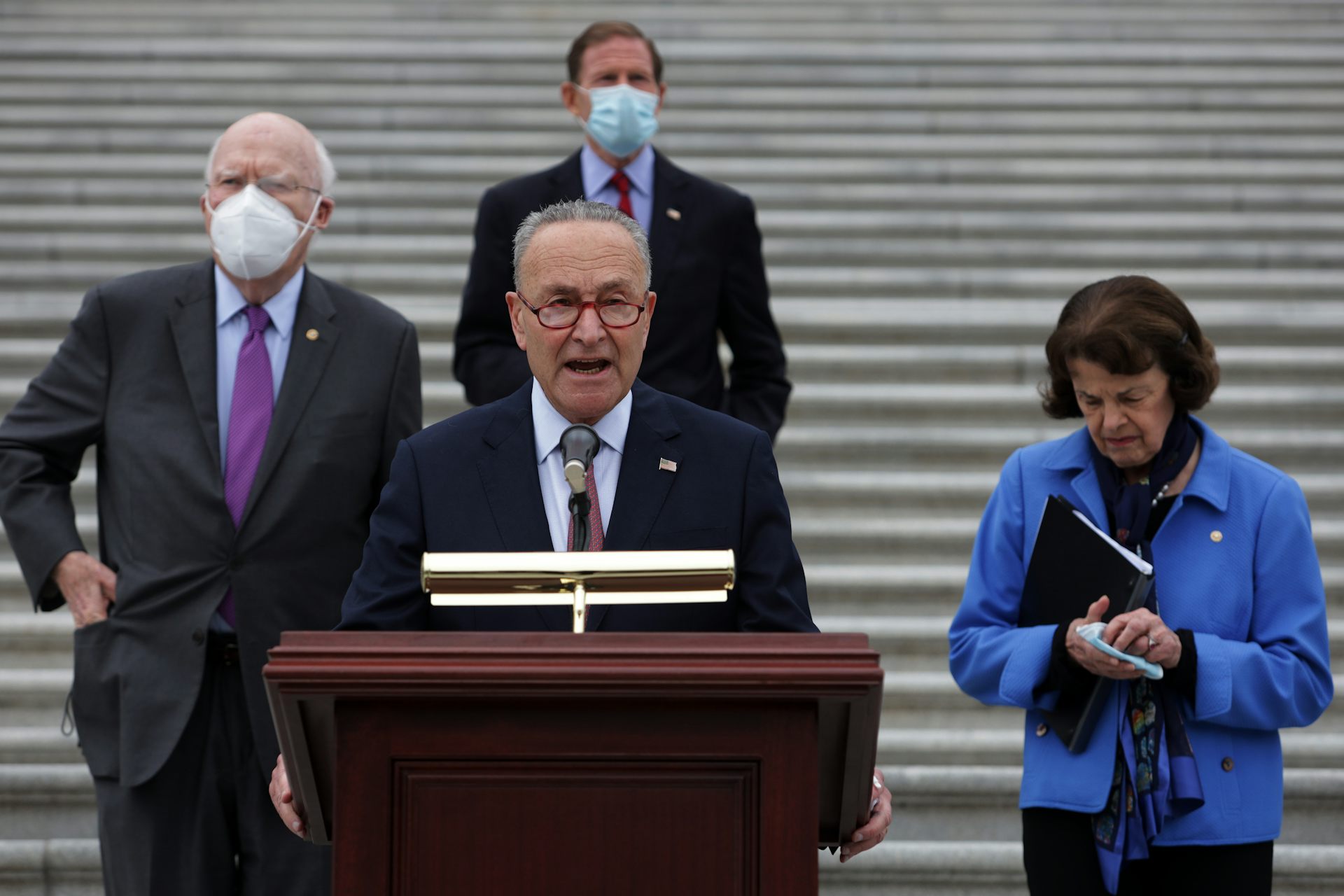
Senate Minority Leader Chuck Schumer made this clear on Oct. 5, 2026, as did Senate Judiciary Committee member Richard Blumenthal, the Democrat from Connecticut. Blumenthal said, “It is slim to none that we would support a nominee from this administration.”
Though Alito has recently indicated he intends to stay on the court through its 2026 term, Thomas has made no recent public statements about retirement. And Alito is free to change his mind at any time.
If Alito or Thomas announced their retirement after the midterms, Republicans would have enough time to confirm a successor. The Senate has four and a half work weeks scheduled between Election Day and Jan. 3. Justice Amy Coney Barrett was confirmed less than a month after her nomination, making the timeline tight but doable.
Democrats will likely attempt to slow down the process, but they face an uphill battle with few options. Republicans stripped away key delaying tactics in recent years by ending the filibuster in 2017 and ignoring the Judiciary Committee’s quorum rules in 2020. This rule requires nine members be present to transact business, including two members of the minority party.
A Republican effort to confirm a Supreme Court nominee during a lame-duck Senate would spark a historic battle with Democrats.
Democrats would surely point to how Republicans handled President Barack Obama’s appointment of Merrick Garland in 2016. A seat on the court opened up after conservative Antonin Scalia died on Feb. 13, almost nine months before the November presidential election.
Republicans refused to move Garland’s nomination through the confirmation process, using their majority power to set the Senate’s agenda. This marked the first time since 1866 that a Supreme Court nomination that was not withdrawn failed to receive an up-or-down vote in the Senate.
To justify this, Republicans created the so-called “McConnell Rule,” named after former Senate Majority Leader Mitch McConnell of Kentucky. According to McConnell, the Senate should not fill Supreme Court vacancies “in the middle of a presidential election year.”
Four years later, Senate Republicans abruptly abandoned the rule. This allowed them to push through Coney Barrett’s confirmation just days before the 2020 presidential election.
Democrats did not take kindly to this reversal.
Schumer pulled no punches in a speech the day of Barrett’s confirmation vote. Schumer said the day “will go down as one of the darkest days in the 231-year history of the United States Senate.”
He alleged the Republican majority made “a mockery of its own stated principle – that the American people deserve a voice in the selection of Supreme Court Justices – completing the partisan theft of two seats on the Supreme Court using completely contradictory rationales.”
Democrats were clearly outraged by what they saw as two stolen Supreme Court seats.
However, I believe that pushing through a nominee will trigger an even fiercer fight. Senate Democrats will see such a confirmation as a power grab that sidelines the voice of voters.
Furthermore, if a Republican justice retires should Democrats win the Senate, the move will almost certainly be viewed as purely partisan.
This has the potential to further erode public support for the court, which is sitting near historic lows. And it will likely fuel the fire of Supreme Court reform, including the possibility of expanding the number of justices on the court.
Put simply, in securing a short-term conservative victory, Republicans may end up handing Democrats the exact justification they need to reshape the high court.
This article is republished from The Conversation, a nonprofit, independent news organization bringing you facts and trustworthy analysis to help you make sense of our complex world. It was written by: Paul M. Collins Jr., UMass Amherst
Read more:
Question of whether taxpayers or fossil fuel companies pay for climate change damage heads to Supreme Court
Why the assault weapons debate is a culture debate
Supreme Court rules your cellphone location data is protected by the Fourth Amendment
Paul M. Collins Jr. does not work for, consult, own shares in or receive funding from any company or organization that would benefit from this article, and has disclosed no relevant affiliations beyond their academic appointment.


















































Comments