White men file workplace discrimination claims but are less likely to face inequity than other groups
Published in Political News

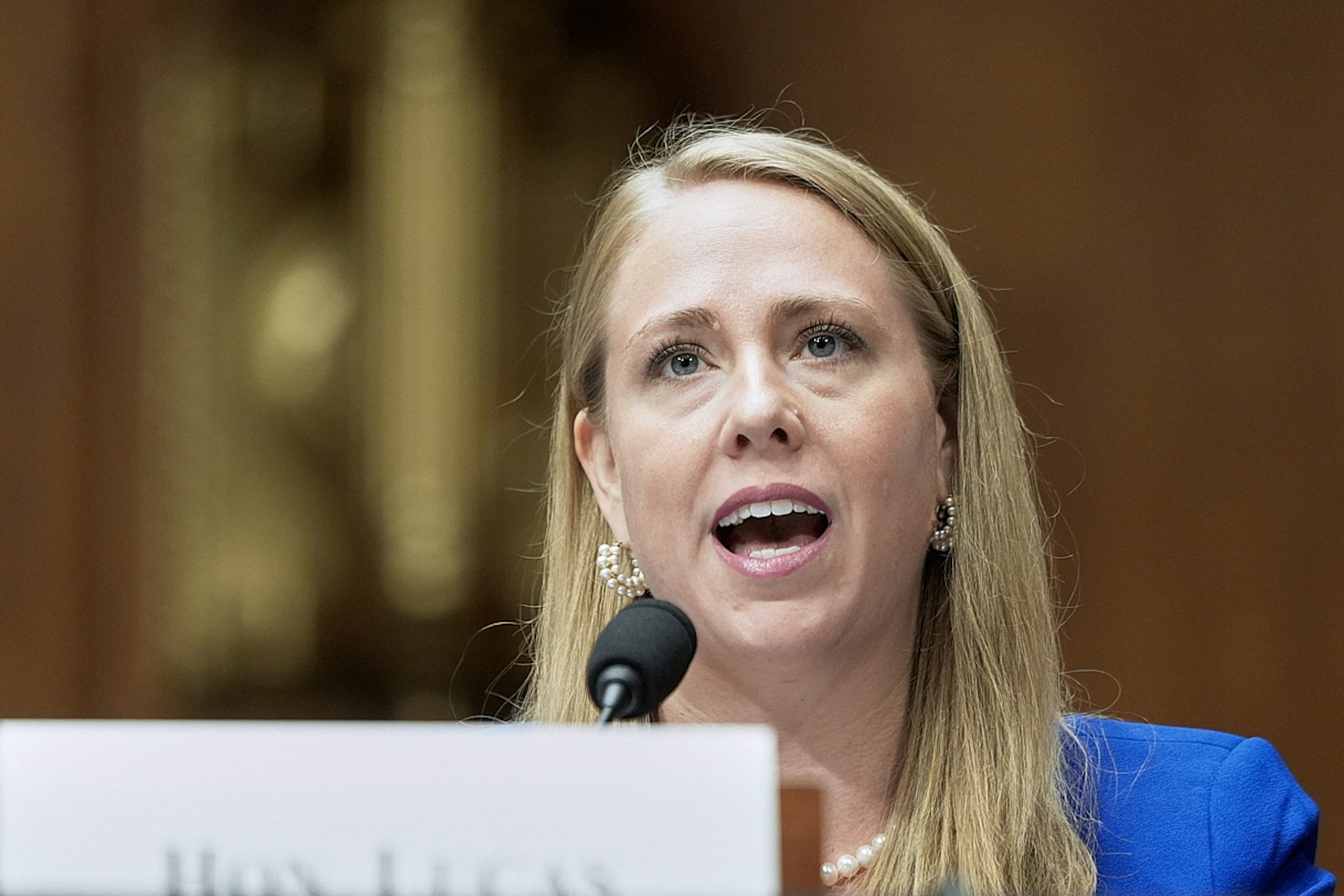



In December 2025, Andrea Lucas, the chair of the U.S. Equal Employment Opportunity Commission, invited white men to file more sex- and race-based discrimination complaints against their employers.
“Are you a white male who has experienced discrimination at work based on your race or sex? You may have a claim to recover money under federal civil rights laws. Contact the @USEEOC as soon as possible,” she wrote in a post on X.
In February 2026, the EEOC began to investigate Nike on what the agency said was suspicion of discrimination against white workers.
Both initiatives followed the EEOC’s March 2025 characterization of diversity, equity and inclusion efforts, or DEI, as potentially discriminatory against white men. The EEOC characterization falls within the Trump administration’s larger pattern of calling DEI “illegal discrimination.”
At the Center for Employment Equity at the University of Massachusetts, we have done extensive research on who files discrimination charges with the EEOC.
Given the EEOC’s December 2025 solicitation for white men to file discrimination complaints, we revisited our prior research to see what is known about discrimination against white people and, in particular, what is known about white and white male discrimination charges registered with the EEOC.
As part of our research, the EEOC gave us access to discrimination charges submitted to the agency and state Fair Employment Practices Agencies from 2012 to 2016. By law, all U.S. employment discrimination claims must be submitted to the EEOC, or state agencies with equivalent roles, prior to any legal actions.
While the EEOC has a history of sharing its data with researchers stretching back to the 1970s, the EEOC stopped sharing current and historical data with researchers in 2016. As a result, we do not have any data on discrimination complaints after 2016. Judging by the EEOC’s yearly reports, the basic patterns have not changed much in the interim.
When we looked at all sex- and race-based discrimination charges received by the EEOC, unsurprisingly we found that men are much less likely than women to file sex-based discrimination charges. But white men do file about 10% of sex discrimination complaints. While Black, Hispanic and Asian male employees are more likely to file racial discrimination complaints, white men file about 9% of such complaints.
In the same study, when we compared legal charges filed with the EEOC to national survey data, we found that percentages submitting a legal complaint to the EEOC roughly correspond to the percentages of survey-reported experiences of discrimination at work. Together, these two findings suggest that white people generally, and white men in particular, were already filing employment discrimination charges.
Second, we did a deeper dive on sexual harassment charges. We found that while white men were 46% of the labor force, they filed 11% of sexual harassment charges and 11% of all other charges, most commonly tied to disability and age.
The general pattern is that, while white men already file discrimination charges, they are less likely to experience employment discrimination than other groups.
Charges filed with the EEOC can result in two types of benefits to the charging party: monetary settlements and mandated changes in workplace practices.
White men who filed sexual harassment charges received some benefit 21% of the time, lower than white women, at 29%. That’s also lower than Black women, 23%, and higher than Black men, 19%. The EEOC already receives discrimination charges from white men and, at least for sexual harassment, treats them similarly to other groups.
Most people who submit a discrimination charge do so to improve their employment experience and those of their co-workers. But submitting these claims to the EEOC or a state Fair Employment Practices Agency is a high-risk, low-reward act.
We found that, at least for sexual harassment, employers responded to white men’s complaints in much the same way as to other groups. White men who filed sexual harassment discrimination charges lost their job 68% of the time and experienced employer retaliation at about the same rate. Retaliation can include firing but also other forms of harassment at work, such as abusive supervision and close monitoring by human resource departments.
We found this pattern of employer retaliation and worker firings for all demographic groups that file any type of discrimination complaint. White men who file discrimination charges receive the same harsh treatment from their employers as any other group.
Urging more white men to submit discrimination complaints based on the perceived unfairness of DEI practices, as the EEOC has done, is likely to lead to job loss and retaliation from employers.
It’s possible that EEOC chair Lucas’ call for more discrimination charges from white men will increase the number of filings.
This is exactly what happened after 2012 when the EEOC ruled that the 1964 Civil Rights Act’s prohibition of sex discrimination also protected LGBTQ workers from sexual-orientation and gender-identity discrimination.
More concerning is the EEOC defining employer efforts to prevent discrimination and create inclusive workplaces as discrimination against white men.
In the end, all workers want to be treated fairly and with respect. Employer efforts to create such workplaces should be supported. It would be a better use of EEOC resources to support companies’ efforts to create such workplaces.
This article is republished from The Conversation, a nonprofit, independent news organization bringing you facts and trustworthy analysis to help you make sense of our complex world. It was written by: Donald T. Tomaskovic-Devey, UMass Amherst and Steven Boutcher, UMass Amherst
Read more:
Complying with Trump administration’s attack on DEI could get employers into legal trouble
12 ways the Trump administration dismantled civil rights law and the foundations of inclusive democracy in its first year
Distrust and disempowerment, not apathy, keep employees from supporting marginalized colleagues
When this research was completed the authors received funding from the W.K.Kellogg Foundation, the U.S. National Science Foundation, and the U.S. Department of Labor.
When this research was completed the author received funding from the U.S. National Science Foundation, and the U.S. Department of Labor.

















































Comments