Lisa Jarvis: The flu is trying to ruin your holiday. Don't let it
Published in Op Eds
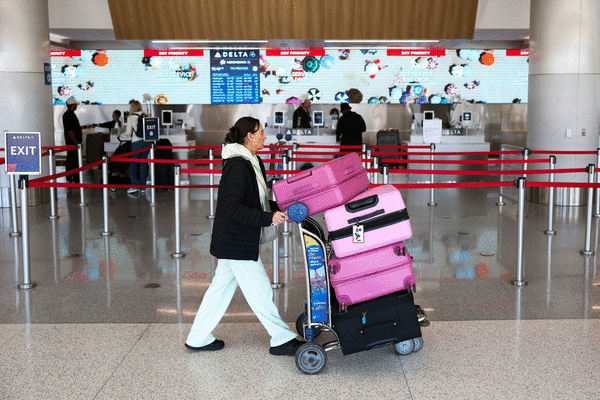
As travelers wedge themselves into planes, trains and automobiles for holiday trips, there’s a good chance they’ll be joined by an unwanted passenger: a new flu strain that seems intent on derailing the season.
With flu cases in the U.S. starting to take off, there are still some steps people can take to avoid — or at least lower the risk of — a miserable holiday. Chief among them: Get a flu shot. No, the vaccine isn’t a perfect match this year, but it can still help prevent severe illness and lessen the virus’ impact.
The most recent data from the Centers for Disease Control and Prevention show that flu hospitalizations are climbing across all age groups in the U.S. Several states, including Colorado, New York, New Jersey and Louisiana, are being hit particularly hard. Some schools around the country have been forced to close as the virus sweeps through the student population. This week, Colorado reported an elementary-school-aged child from the Denver area had died from the flu, a stark reminder of the grave consequences of this common virus.
The culprit behind the outbreak, which hit Japan early then strained hospitals in the UK and spread to other parts of Europe before reaching Canada, is a new strain dubbed subclade K. The flu genome is constantly undergoing minute changes that, cumulatively, can allow the virus to sidestep our preexisting immunity (the defenses established by past infections and vaccinations) as well as the protection offered by the annual flu shot. In subclade K, those changes amount to subtle differences in a key protein that allows the virus to glom onto — and ultimately infect— human cells.
While some headlines may heighten fears that the world is witnessing a new supercharged flu capable of making everyone much sicker, infectious disease experts take a less dramatic view. Researchers are still trying to understand this new strain, explains Andrew Pekosz, a professor of molecular microbiology and immunology at Johns Hopkins University’s Bloomberg School of Public Health. Right now, he says, we don’t know whether the new strain is causing more severe infections or whether its ability to evade our immunity better is simply leading to more infections, some of which can become more serious — as with any flu.
The one sure thing is that flu cases are on the rise nationwide, a trend that will persist throughout the holiday season. That makes taking precautions to lower the risk of infection and spread more important than ever.
That starts with getting vaccinated. Although the drift in the virus’ genome means our current vaccines are a less-than-ideal match, it doesn’t mean they’re useless. For starters, they remain effective against other virus strains that may circulate later in the season. And even that imperfect protection against subclade K is better than nothing. It still should lower the risk of serious infections — the kind that can land even healthy people in the hospital — and might shorten the time you’re ill.
The message that the flu vaccine is a safe and valuable tool, even with its imperfections, is one more Americans need to hear. Flu vaccination rates have steadily declined among some of the most vulnerable groups, including children, pregnant women and, last year, even the elderly.
That growing reluctance to vaccinate likely worsened last year’s treacherous flu season, which hospitalized an estimated 1.1 million people and killed 280 children — the highest number outside of a pandemic year in more than two decades.
This year, even fewer people seem to be getting their shots. Although some of the CDC’s data on flu vaccination uptake is lagging, what we have so far shows another dip in children’s vaccination levels and a drop-off in the number of adults vaccinated in pharmacies and doctors’ offices.
There’s still time to turn those numbers around. It’s not too late to get a shot — flu season is just getting started in the U.S., and getting vaccinated now could offer a layer of protection throughout the holidays and beyond.
Remember that if you do get sick, antivirals are still effective against this new strain and can help lessen your misery — but only if you start them quickly. To work, they must be taken within the first two days of symptom onset. To that end, the recent availability of at-home rapid tests that can distinguish between flu and COVID are a worthwhile addition to your medicine cabinet.
Lastly, anyone starting to feel sick should consider skipping the Christmas or New Year’s gathering. That’s especially true if vulnerable family members — say a grandparent, a newborn, or someone going through chemo — are attending. Nobody wants to miss out on family time, but making sensible choices now is the best way to protect everyone from another severe flu season.
____
This column reflects the personal views of the author and does not necessarily reflect the opinion of the editorial board or Bloomberg LP and its owners.
Lisa Jarvis is a Bloomberg Opinion columnist covering biotech, health care and the pharmaceutical industry. Previously, she was executive editor of Chemical & Engineering News.
©2025 Bloomberg L.P. Visit bloomberg.com/opinion. Distributed by Tribune Content Agency, LLC.





















































Comments