Appeals court allows US to go ahead with detonation in Iowa
Published in Science & Technology News
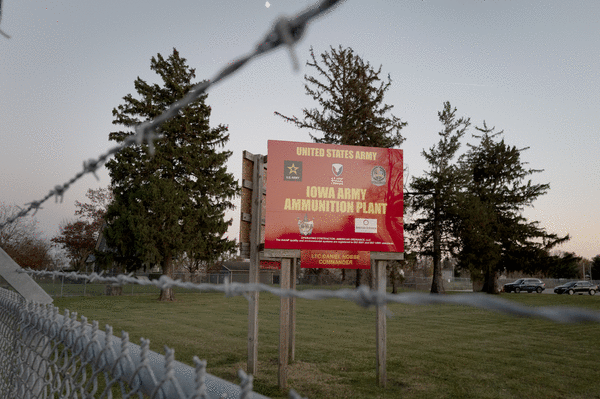
WASHINGTON — A U.S. appeals court on Monday evening allowed a controlled detonation of hazardous materials stored at an Army facility in Iowa to go forward, but President Donald Trump has said the state’s incoming Democratic governor had to decide, warning that the delay raised the risk of “a large, spontaneous explosion.”
At issue are 68 drums of lead azide, which had been used as a primary explosive in munitions and stored at the Iowa Army Ammunition Plant in Middletown. Environmental organizations contend that an open-air detonation would create a hazardous plume of lead dust that could affect communities dozens of miles away.
But the Eighth Circuit Court of Appeals concluded that the U.S. Environmental Protection Agency had “adequately incorporated safeguards to minimize the dispersal of lead dust into the environment and mitigate the risks associated with potential exposure pathways.”
Earlier Monday, before the court issued its decision, Trump wrote that without a favorable ruling and the consent of Governor-elect Rob Sand, “we will have no choice but to not proceed with the controlled removal of these hazardous materials, and be forced to hold the incoming Governor responsible for any and all death or destruction caused by this very unfortunate, and long term, situation.”
The president’s announcement followed multiple postponements of the detonation.
In a statement, Sand said the Trump administration should act based on the knowledge of the experts it has deployed to the site in Middletown. He added that Iowans “should have the same access to the information I’ve received in briefings from the administration, straight from the source. I’ve asked the federal government to share that information with the public as soon as possible.”
The Iowa Environmental Council and Sierra Club had asked the appellate court to halt the detonation, which had been scheduled for Nov. 20, and challenged the EPA’s authorization.
In a Nov. 20 letter to Iowa Gov. Kim Reynolds, EPA Region 7 Administrator Jim Macy said the Army had determined “recrystallization of the lead azide in long-term storage had occurred” and posed “a risk of spontaneous explosion due to the material’s sensitivity to friction and shock.” The service determined that a controlled detonation was the only viable option, he wrote.
The Army said Sunday that the detonation had been rescheduled for Wednesday “to allow for more optimal weather conditions and all mitigation measures to be emplaced.”
Trump said experts believe “there is a substantial chance that this material will explode of its own volition, perhaps sometime in the near future.”
Spokespeople for the Army did not immediately respond to requests for comment.
The Army, EPA and the Department of Health and Human Services said in a joint statement on Nov. 20 that the entire government was working to ensure the safety of the planned detonation. Last month, the Army held a consultation with officials and residents of Middletown to answer their questions.
“Officials have been meticulously planning for this event since March, and all agencies involved are prepared to take the most extreme mitigation measures available to ensure there is no risk to the public and any disruptions are minimized,” the agencies added.
Senator Chuck Grassley of Iowa said in a statement on Monday evening that “a controlled, safe removal of the lead azide far outweighs a spontaneous catastrophe.” He added, however, that not enough information had been provided to the public, and “I will continue to demand answers so Iowans have a thorough understanding of the Army’s decision-making process.”
_____
(With assistance from Jen Judson, Peter Blumberg and Steven T. Dennis.)
_____
©2026 Bloomberg L.P. Visit bloomberg.com. Distributed by Tribune Content Agency, LLC.






Comments