
Here's How: Test of Dangerous Materials During Project
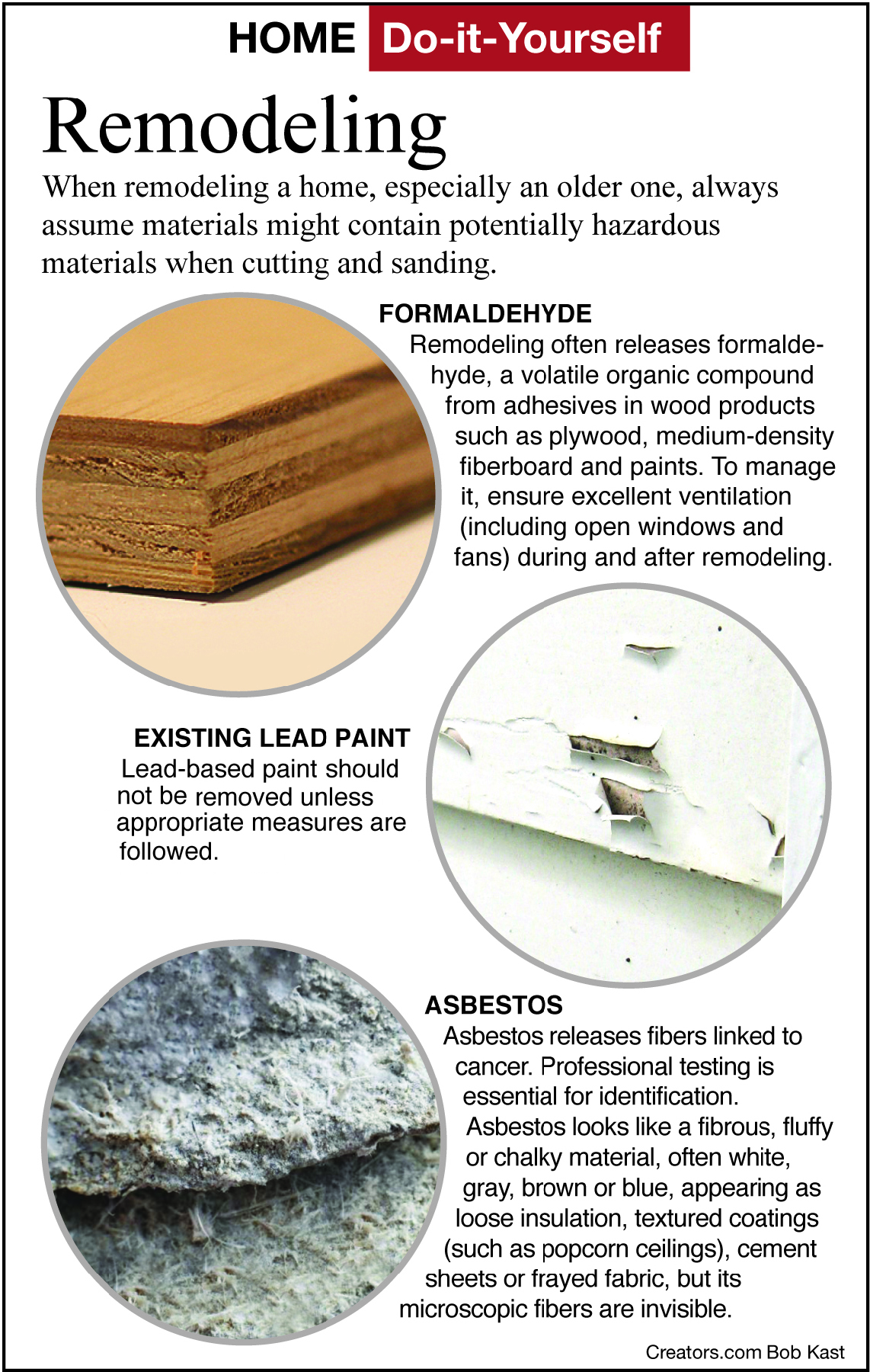
Dear James: We are getting ready to do some remodeling in our house. Being old, it may contain lead, asbestos and formaldehyde. Could these be an issue for my children? What should I know before starting? -- Jerry F.
Dear Jerry: Yes, they could present health hazards. You have identified three common indoor pollutants in homes. The period in which your house was built is often a good indicator of which of the above indoor pollutants are likely present, but not always. The builder may have also kept some old building materials around or used some materials salvaged from an older house.
Lead exposure is dangerous, especially to children and pregnant women. Lead poisoning can cause irreversible brain damage in children and can stunt fetal growth in pregnant women. It may also cause elevated blood pressure, impaired muscle coordination and damage to the nervous system in adults.
The primary source of lead in a house is from lead-based paint. Lead was used as a drying agent and pigment in oil-based paint. Modern water-based latex paints do not contain lead. If your house was built before 1960, there is better than a 50% chance that heavily leaded paint was used.
The best method to test paint you suspect of containing lead is to send a sample of the paint to an EPA-approved laboratory. Contact your local health department for the names of approved laboratories. There are some do-it-yourself test kits available, but they may miss low lead levels.
The laboratory will tell you the size of paint sample it needs for testing, but a 2-inch-square piece is typically required. The lab will send a bag and sample collection procedures to you. Generally, you use a clean putty knife to scrape off the sample piece.
If the test results show that lead is present, you have several remedies. If it is woodwork that can be removed, do that and replace it with new wood. If not, the best method is to contact a professional trained in removing lead-based paint. Just painting over it with non-lead-based paint is not a long-term fix.
Formaldehyde is used in many building materials, furniture, carpeting, etc., in homes today. The formaldehyde gas emissions are highest in new building materials, so it is most likely not a major problem in an older home. If you have just remodeled, though, the gas levels can be elevated.
Formaldehyde gas is more of an annoyance than a serious health threat like lead and asbestos are. The emissions from the new building materials or furniture will decrease over time. Increasing the fresh air ventilation in your home can help until the materials age a little and the formaldehyde off-gassing subsides.
Asbestos is particularly dangerous. Exposure to it can lead to lung cancer and skin, eye and respiratory irritation. Asbestos was commonly used in older homes for duct insulation, pipe coverings, textured paints and floor tiles.
If the asbestos-containing material is not deteriorating, it is probably not a current threat. You should still have any materials suspected of containing asbestos tested by an approved lab. It is best to let professionals remove the sample to avoid exposing your family to it.
When asbestos is found, the professionals will either seal it or cover it. It can be sealed with materials that bind the asbestos fibers together. Pipes and other smaller items can be covered by wrapping them with a protective film.
========
Send your questions to Here's How, 6906 Royalgreen Dr., Cincinnati, Ohio, 45244 or visit www.dulley.com. To find out more about James Dulley and read features by other Creators Syndicate writers and cartoonists, visit the Creators Syndicate website at www.creators.com.
Copyright 2025 Creators Syndicate Inc.



























Comments