Can you afford a full-body scan? Can you afford not to have one?
Published in Health & Fitness

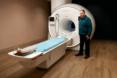
FORT LAUDERDALE, Fla. — Paul “Cid” Ceresa of Boynton Beach says he would have had no idea he had prostate cancer had it not been for a preventive full-body scan that uncovered abnormalities.
“The scan caught the cancer early enough for me to be able to take action,” Ceresa said. “Mine was aggressive form, which is harder to tackle, and the prognosis is not as favorable. If I had not had a whole-body MRI, we would be having an entirely different conversation.”
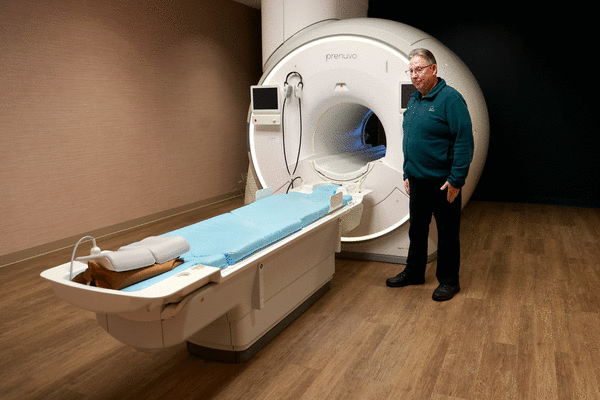
Preventive full-body scans, typically not covered by insurance, aren’t cheap, with the average consumer paying about $1,000 to $2,500 out of pocket for a deeper look at their internal organs. But after spending about 50 minutes inside a machine that travels up and down the body, patients get a detailed report with images that illuminate organs where cancer could hide, as well as insights into other symptomless medical conditions.
Fear of late-stage cancer, sudden cardiovascular events, and aneurysms has made full-body scans a healthcare trend more South Floridians are participating in. Driven by celebrity endorsements and social influencers, these scans have become popular for proactive patients willing to pay for early detection, medical information, and peace of mind.
A shift toward proactive medicine
“Medicine is shifting from healthcare 2.0, which is treating disease and symptoms, to healthcare 3.0, which is more prevention or the early detection of disease,” said Dr. Ricardo Cury, chairman and professor of radiology at Florida International University and Baptist Health South Florida. “With these scans, you can detect disease early and act before symptoms show.”
As demand grows, the preventive imaging landscape is rapidly expanding in South Florida, where major healthtech brands and local radiology networks operate screening centers—such as Prenuvo in Coral Gables and Boca Raton, and Function/Ezra in nine South Florida cities. Even health systems such as Baptist Health South Florida now offer preventive full-body MRIs as outpatient services. A new player is entering South Florida by the end of the year: Neko Health, a Swedish whole-body imaging company co-founded by Spotify billionaire and former CEO Daniel Ek, will open in Aventura.
Critics argue that routine scanning of individuals without any symptoms frequently uncovers harmless medical issues — such as benign nodules, cysts, or other quirks — that trigger unnecessary anxiety, invasive follow-up biopsies, radiation exposure from subsequent testing, and exorbitant out-of-pocket costs.
“You are hearing about those success stories, and I’m so happy for these people, but they are also finding things that don’t necessarily mean anything,” said Dr. Atif Hussein, chief of Memorial Cancer Institute. “You can have a tiny spot in the lung, and then you need to pursue it. You do more scans, more biopsies, suffer more side effects, and you’re going down the rabbit hole with that.”
Hussein said another drawback for average-risk people is that a “clean” scan does not mean a patient has a clean bill of health.
“It should be considered one piece of preventative healthcare, not the entire picture, and other preventative health measures, such as colonoscopies, mammograms, and bloodwork, should still be done,” he said.
Yet drawbacks aren’t stopping the surge in popularity of full-body scans among consumers who increasingly want data-driven control over their health.
Inside the scan: What patients experience
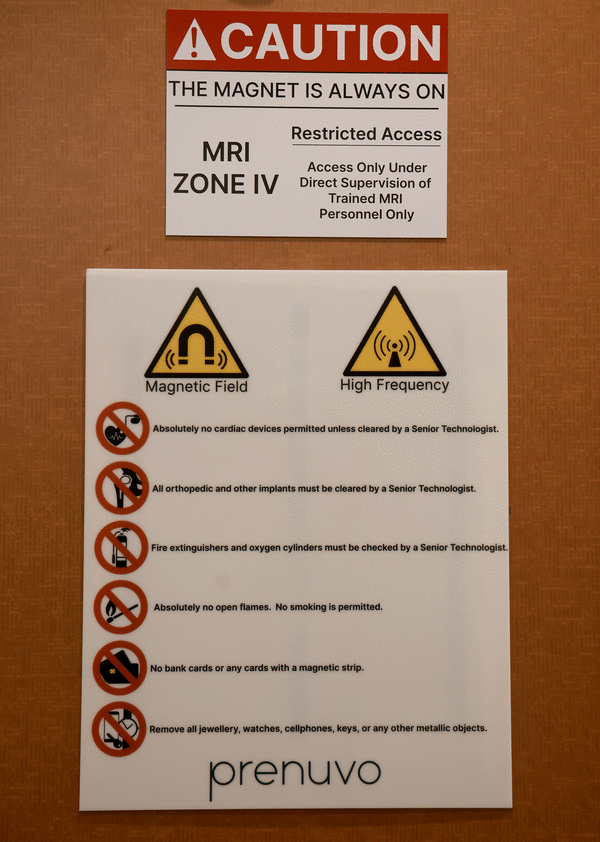
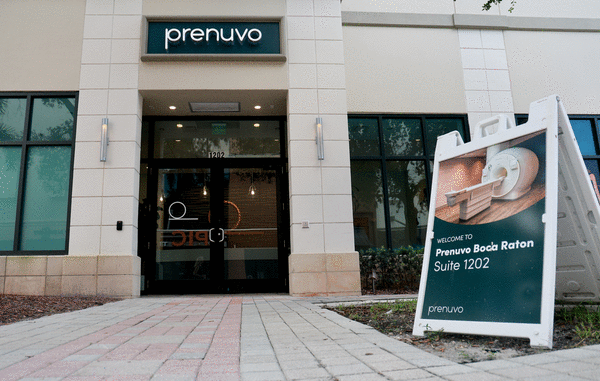
Prenuvo has been operating a location in Boca Raton’s Mizner Park for four years, one of its 24 U.S. locations. Technologists at the center say they scan about 25 people a day on three giant MRI machines, looking for medical issues before symptoms appear. Inside the tube, patients watch Netflix shows while the machine scans as many as 33 organs. Prenuvo’s scan can capture up to 10 times more images at higher resolution than a standard MRI, said Jeff Doctor, a senior technician at Prenuvo in Boca Raton. Within two to 10 days, a radiologist sends the patient an 18- to 22-page report, along with 3,000 to 5,000 images of their body and internal organs. The report notes any abnormalities that require follow-up care.
“It’s a very detailed report,” Doctor said.
“Every one of our radiologists across the country is board-certified, not just board-eligible, and they go through the images the same exact way,” said Dr. Daniel Durand, Prenuvo’s chief medical officer. “We are going to find stuff, and that’s the point of the process, not an untoward result.”
Durand said the most common finding is fatty liver disease. “About 96% of the people who have this fatty liver disease in the United States do not know it, so we’re able to give people that information,” he said.
A Prenuvo medical provider then spends up to 40 minutes discussing the detailed report with each customer. “We generally refer them back to their primary care, but sometimes we say, hey, you should go direct to the specialist for this type of thing because it’s clear enough from the imaging that you’re going to need the specialist,” Durand said.
Real-world cases and celebrity endorsements
Ceresa, a 71-year-old retired Boca Raton firefighter, said when his Prenuvo scan showed prostate abnormalities, he followed up with a urologist who performed a biopsy and diagnosed cancer.
“When I made an appointment at Prenuvo, I didn’t think I had an issue. I just wanted to be proactive,” he said. “I wanted to rule out lung cancer and brain cancer because people in my vocation have a high incidence of that stuff.”
Ceresa said the insurance trust fund union for retired firefighters that he belongs to offers a discounted rate for the scan.
Rather than surgery, he opted for radiation and cancer-suppressing injections. He now has regular blood tests for recurrence.
“It’s been a year, and so far all my markers have no indication of recurrence or residual cancer. That’s the success part of it,” he said.
Celebrities with health scares are drawing attention to the Prenuvo scan’s potential to find life-saving issues. Kim Kardashian posted on social media that her Prenuvo scan revealed a small aneurysm. She did follow-up MRI scans of her brain and, rather than surgery, her doctors placed her on ongoing monitoring. Television host Maria Menounos recently shared on social media how her experience with Prenuvo revealed she had a small mass that was later diagnosed as Stage 2 pancreatic cancer, one of the deadliest types of cancer. Finding it early, she had the tumor surgically removed, along with parts of her pancreas, spleen, a large fibroid, and 17 lymph nodes, giving her a good prognosis.
In South Florida, Baptist Health has two full-body scan machines: one at its cancer center for patients with a predisposition to cancer, and another through its executive health program for anyone who wants it.
Baptist’s Cury said the full-body MRI “does not cover all the organs or all the diseases, which is important to emphasize.” He said regardless of findings, an individual would still need other screening tests, such as colonoscopies, mammograms, Pap smears, and, for smokers, lung CT scans. Full-body MRI screening isn’t as detailed as focused imaging of a single joint or organ, but it can be effective when combined. “That multi-modality approach is critical.”
“Any screening test should be approached thoughtfully with physician guidance,” he said. “We’ll not catch everything, but we’ll catch a lot of pathologies that could be treated earlier.”
Beyond full-body MRIs
Now, a new screening company will open a center in South Florida, a concept that has drawn a lot of buzz elsewhere.
Neko Health, a European firm launched by the founder of Spotify, plans to open a location in Aventura by the end of 2026. Before the company opened its first U.S. clinic in New York City’s SoHo in September, more than 25,000 New Yorkers had already joined the waitlist, and the company has started a waitlist in Miami.
Neko isn’t an MRI or CT scan. Instead, in one hour, the company uses imaging devices it developed that check heart, skin, blood and metabolic health. The patient stands inside a circular scanner that takes about 6,000 high-resolution images of the body.
Cameras using visible light, infrared thermal imaging, and depth sensing map the skin and flag moles or other concerns worth a closer look. Customers then move to an exam table for blood pressure checks, body composition analysis, an EKG and other cardiac measurements, grip-strength tests, eye-pressure tests, and a 53-biomarker blood panel processed on-site. That takes about 30 minutes. Afterward, a Neko medical professional will meet with patients for another 30 minutes to discuss the results and refer them to a specialist if needed. No prior authorization is needed to order labs.
“From the very beginning, we wanted to come up with a way of democratizing access to really high-quality preventive healthcare,” said Neko Health co-founder and CEO Hjalmar Nilsonne, a Swedish entrepreneur told the South Florida Sun Sentinel. “The wonderful thing with chronic disease is that there actually is a pretty good solution to it if you find it much earlier.”
Nilsonne said Neko’s technology exists only within its clinic. It screens for medical conditions “that carry the largest prevalence and have the largest disease burden.”
“We bring this very affordable way of tracking the things that really matter the most,” he said. Those things include melanoma, cardiovascular disease, metabolic syndrome and cardiac arrhythmias.
“In 1% of our scans, we find something immediately life-threatening,” Nilsonne said. “And this has been consistent over three years. And then for about 5 to 6% of scans, we find serious undiagnosed conditions that are not life-threatening, but if they’re not treated, this person will have a dramatically lower quality or length of life.”
Neko Health’s chief medical officer, Dr. Sunita Mishra, said that, unlike full-body MRIs, Neko’s scans have a lower chance of false positives “because we actually do additional testing internally.”
Mishra said the Neko medical professional who talks to a patient about results discusses an action plan, including a referral to a community specialist if needed. In the U.S., Neko Health has added body composition and fitness-wearable data to a customer’s assessment and action plan.
Nilsonne said a waitlist already exists for Miami, but anyone on it can expect to get an appointment within six months. He believes the company’s growth has a clear impetus: “I feel like people are more and more interested in how they can lead healthier lives and there aren’t a lot of avenues for people to get that type of care.”
The push for annual memberships
Going forward, full-body scan providers are steering toward a membership model that encourages a year-over-year view of someone’s health.
“When members return, they’re gaining consistent, comparable insights into how their health is changing and where action may be needed,” said Durand at Prenuvo.
Neko Health’s CEO said his model also focuses on returning customers. “Once people experience it, most people come back every year or so. I think one of the reasons is that they want to start logging their data and then see how we derive more and more insights from it,” Nilsonne said.
Ongoing skepticism
Regardless of the provider, skepticism of these scans abounds.
“I think any time you’re doing a new type of medicine that’s innovative and disruptive, it takes a while for people to understand it,” Durand said. “I am seeing major institutions in the world that have started doing this, elective whole-body MRIs, and are not being shy about it. It is very validating for us.”
In January, a 35-year-old Manhattan resident sued Prenuvo after alleging his scan and report showed no major problems. Eight months later, he suffered a debilitating stroke, according to his lawsuit.
“It’s a question really about the sensitivity of the exam, because there are human beings involved, right? No test is perfect,” said Prenuvo’s Durand. “Some parts of the body have limitations. But if you’re looking for one intervention to add to the rest of what you’re already getting, this is a very comprehensive intervention.”
Durand said, when it comes to your health information: “There’s not a single higher-yield hour of your time.”
____
©2026 South Florida Sun Sentinel. Visit at sun-sentinel.com. Distributed by Tribune Content Agency, LLC.





Comments