US reportedly will lose measles elimination status, as Pennsylvania confirms 7th death of current outbreak
Published in News & Features
PITTSBURGH — The United States has lost measles elimination status, per multiple reports, a status it has held since 2000.
Losing measles elimination status means the highly contagious virus is now considered endemic in the country, representing continuous transmission. Epidemiologists consider it a major setback for public health progress, which will increase the public’s susceptibility to being exposed, and potentially harmed, by the virus.
The news was first reported by the Wall Street Journal. The group that makes the decision, the Pan American Health Organization (PAHO), confirmed to the Post-Gazette by email that it would officially announce its decision on Tuesday. PAHO met in Washington, D.C., from Nov. 10-13 to deliberate, considering the measles status in the U.S. and Mexico.
The status change comes as Pennsylvania shoulders the country’s worst measles outbreak in half a century, with 1,542 reported cases of the virus as of Friday and 305 hospitalizations. An additional measles-associated death was also announced by the state on Nov. 13 — in Montour County, with four reported cases — which is the seventh confirmed death in Pennsylvania this year. The virus has been reported in more than two-thirds of Pennsylvania’s counties.
The U.S. has 5,412 confirmed cases of measles this year, the Centers for Disease Control and Prevention reported on Friday.
Eliminating measles was a “tremendous achievement,” said Paul Offit, a physician and director of the Vaccine Education Center at Children’s Hospital of Philadelphia, in a Thursday webinar on the topic. Losing the status, he said, is “a tremendous step backward.”
The Pan American Health Organization — a panel under the umbrella of the World Health Organization — based its ruling on measles data from January 2025 to June of this year.
The organization, which, per its website, has 36 members from the Americas, meets every few years to discuss and reverify measles and rubella status, based on vaccination rates and transmission. Canada lost its status last year.
In a statement on Saturday, the American Academy of Family Physicians called the status loss “a dangerous and serious step backward for public health.”
The group underscored a common theme — of science and public trust.
Loss of elimination status, the organization said, “does not mean the MMR vaccine has stopped working. It means we must restore confidence in the safety and efficacy of life-saving public health tools.”
Measles is considered to be endemic to a country when a chain of transmission of a viral strain spreads uninterrupted for 12 months. Epidemiologists are able to track specific viral strains and track how they spread based on positive confirmed lab results of measles, as well as through the work of contact tracing and learning who an infected person interacted with.
“The U.S. is no longer a safe place for children with respect to measles,” said Noel T. Brewer, a public health professor at the University of North Carolina at Chapel Hill, during the webinar. Brewer is chair of the National Verification Committee for the Elimination of Measles, Rubella and Congenital Rubella Syndrome, which is the group that ultimately reviewed U.S. measles data and passed its recommendation along to PAHO to consider.
“It’s unconscionable that we have this many cases,” he said. Brewer is also a former member of the Advisory Committee on Immunization Practices, the federal panel that reviews and updates safety guidelines for immunization in the U.S.
Regaining elimination status takes time. A country must interrupt continued transmission for at least one year and is required to submit an action plan to the World Health Organization, outlining how it intends to increase disease surveillance, vaccination rates and coordinate a response to outbreaks in the future.
Despite the setback, Brewer applauded local health departments for “knocking it out of the park” in their specialized efforts to quell their own outbreaks.
Pennsylvania topped Texas and South Carolina in both measles case numbers and deaths earlier this summer, largely due to plummeting immunization rates in the general population — a barrier that had previously protected unvaccinated groups including the state’s Amish and Mennonite communities from errant transmission of the virus. With that barrier eroded, measles flooded these communities, sometimes sickening all members of a family and significant portions of entire towns.
A Post-Gazette investigation found that one in three elementary schools in Pennsylvania have dropped below a crucial threshold of herd immunity for measles, leaving large communities vulnerable to an outbreak as myths about vaccination flooded social media — sometimes from the highest branches of government.
“They’re making up harms that don’t exist and then putting them in the public space from a very loud platform,” Brewer said.
He pointed to the Aug. 10 executive order signed by President Donald Trump to split the MMR vaccine into three separate shots, in which Trump referenced a debunked theory that separating the doses out would be safer and increase uptake, saying the combination could be “quite lethal.”
“There is no evidence for increased uptake,” said Brewer. “I would say the opposite is happening. They are sowing fear.”
Public health experts also expressed concern about a general tone of silence from the Centers for Disease Control and Prevention and urged leaders to inform the public about the scale of the problem.
“We are in the midst of the biggest measles outbreak in three decades. This is an emergency,” said Offit.
“We need a single powerful voice in favor of measles vaccination,” Brewer said. “That does have an effect on what the public is willing to do. What we have right now is the opposite — a messaging that is undermining vaccination.”
Otherwise, much of the response is coming from local health departments, experts said. Brewer commended Pennsylvania specifically for “doing every last thing you could imagine with limited resources.”
Lisa McHugh, director of the Bureau of Epidemiology at the Pennsylvania Department of Health, said the state has tackled the spread in part by ratcheting up vaccination efforts.
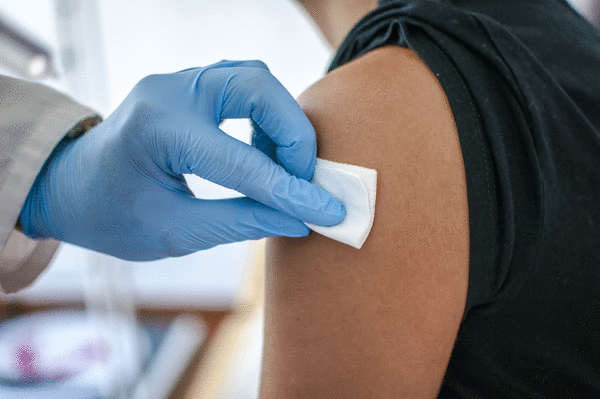
She pointed to a doubling of the average monthly doses of the measles, mumps and rubella vaccine given to Pennsylvanians in the month of September — 52,000 doses given, as opposed to a typical average of 25,000 — with an additional 61,000 doses provided in October.
DOH has also worked to vaccinate babies between the ages of six months and one year, who can get what is considered “dose zero” if they live in an area with an active outbreak, amounting to more than 18,000 doses given to babies at six months old, McHugh reported.
Staff is cautiously optimistic that those efforts are beginning to drive numbers down.
“We’re thankfully starting to see a decreasing trend and hoping that continues,” she said.
The U.S. has seen a handful of annual measles cases since 2000, but the virus was still considered eliminated because these small outbreaks were sporadic and died off quickly, with high vaccination rates that protect the community. That’s no longer the case, due to a drop off of immunization rates over the last 10 years.
“This is an outbreak of the unvaccinated,” McHugh said.
In a statement, the American Public Health Association said the loss should have been prevented.
“A national call to vaccinate to slow the spread of the infectious disease, especially as outbreaks emerged in 2025, would have prevented this,” the organization said Friday. “Instead of choosing to take such preventative measures to keep communities healthy and maintain the nation’s elimination status, HHS leadership allowed unscientific ideas and talking points to guide important decision-making, leading to a web of confusion and heartbreaking loss.”
©2026 PG Publishing Co. Visit at post-gazette.com. Distributed by Tribune Content Agency, LLC.




Comments