In Minnesota, big DFL ambitions head for collision with Klobuchar's hard line on taxes
Published in News & Features
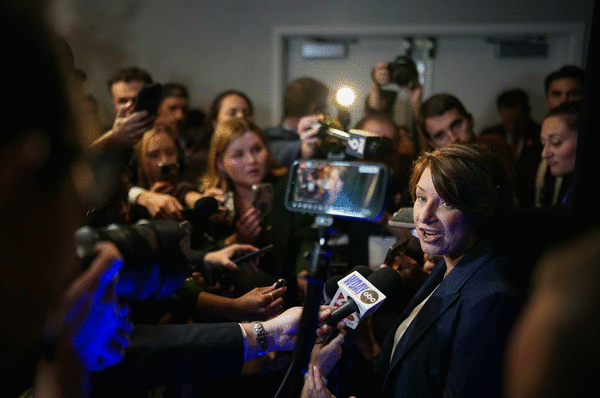
MINNEAPOLIS — Minnesota Democrats swept back into full control of state government promising to make life more affordable, and Amy Klobuchar and DFL legislative leaders already agree lowering health care, child care and housing costs must come first.
Now comes the harder part: delivering on their promises with a tight budget and a governor-elect who has ruled out raising taxes.
“These are big, important issues, and some of them will cost money,” incoming House Speaker Zack Stephenson said. “We’ll just have to see where the budget’s at on these things.”
That is the central challenge facing Democrats as they prepare to govern together in January.
Democrats used a historic budget surplus to enact a sweeping progressive agenda when they last held full control of Minnesota government in 2023 and 2024. Now, the moderate Klobuchar is promising a different approach, setting up a potential clash with more liberal lawmakers who are eager to address the rising cost of living without the financial cushion that fueled their ambitions three years ago.
“I think you’re gonna see a very different trifecta,” said state Sen. Nick Frentz, DFL-North Mankato, using the shorthand term for holding the governor’s office and both legislative chambers. “I think you’re gonna see a DFL that wants to govern with an eye on what the people say is their priorities.”
Senate Majority Leader Erin Murphy, DFL-St. Paul, also drew a distinction between the coming session and Democrats’ last stretch of unified control.
“We don’t have a list of pent-up things that people want to pass,” Murphy said. “Instead, we have a pretty significant list of problems and issues that Minnesotans are experiencing.”
Incoming DFL leaders agree on the problems they want to tackle, but not necessarily how they should do it. Progressive lawmakers want to establish nearly universal child care and primary care while closing tax loopholes for the richest Minnesotans and large corporations.
Klobuchar has outlined a more incremental approach: expanding child care “pods” and other innovative models, blocking “excessive” health insurance premium hikes and working with the private sector to build 100,000 more homes.
At a news conference Wednesday, she reiterated a pledge not to raise taxes to pay for these proposals.
“I have been very, very firm on this. I am not going to raise taxes, and that is not going to change,” Klobuchar said.
Instead, she said, Minnesota needs to cut red tape and possibly “reduce some taxes” to improve economic growth that has trailed the nation’s.
The 2027 session will almost certainly test Klobuchar’s ability to hold the line on taxes and spending. House Republican Leader Harry Niska said Democrats showed in 2023 they are “willing to raise taxes by billions to pay for their wish list.”
“The question now is whether Gov.-elect Klobuchar will stand up to the tax-and-spend wing of her party, or whether she’ll be another rubber stamp for the far-left agenda, like Tim Walz was,” Niska, R-Ramsey, said in a statement.
The state’s last forecast showed a structural deficit on the horizon — the state is spending more than it takes in — though more recent revenue reports have been more optimistic. Stephenson said updated forecasts and Klobuchar’s first budget proposal will help define what is possible.
“We need a lot more information before we start to talk about how we’re going to resolve a budget,” Stephenson said.
But he made clear that House Democrats intend to bring their own ambitions to the negotiations.
“The House DFL is the engine of change in Minnesota,” Stephenson said. “We are the people who bring the ideas to the table.”
Murphy said it likely will take time for Klobuchar and legislators to reach agreement on how to address the cost of living. Other issues could see quicker action.
Murphy said Klobuchar indicated she would like to see a vote on gun safety legislation early next year. Klobuchar has said she would sign a bill banning assault-style weapons and high-capacity magazines after the mass shooting at Annunciation Catholic Church and School in Minneapolis. The Senate passed a sweeping gun violence prevention bill that included the bans earlier this year, but the legislation failed to make it through the House.
“The gun safety bill … is going to get passed, and I am so excited to be working with the leaders on this,” Klobuchar said.
She said she has been in close contact with the parents of 10-year-old Harper Moyski and 8-year-old Fletcher Merkel, who were killed in the mass shooting.
Lawmakers also hope to revive legislation responding to last winter’s immigration crackdown. The DFL-controlled Senate passed a package to restrict federal agents’ use of masks, protect access to schools and health care facilities and allow people to sue over constitutional violations.
It stalled in the tied House amid Republican opposition.
Rep. Brad Tabke, DFL-Shakopee, who helped lead some of those efforts, said the election was not a “mandate to do whatever we want.”
He said Democrats must address affordability while also holding the federal government accountable for its actions in Minnesota, including the fatal shootings of Renee Good and Alex Pretti.
Klobuchar is promising a different approach to negotiations, including a place for Republicans even though Democrats will have the votes to pass legislation without them.
By Wednesday morning, she had spoken with all four DFL and GOP legislative leaders. She told reporters she intends to include the Republican minority leaders in legislative negotiations. During the 2023 DFL trifecta, GOP leaders complained they were shut out of budget talks.
“You’re going to see in me someone that values those relations with the people in the Legislature,” Klobuchar said, pointing to her record of passing bipartisan legislation in the U.S. Senate.
“You don’t get to that stage in the U.S. Senate if you don’t understand the value of working with people both on the Republican side and in the same caucus you maybe don’t always agree with.”
Frentz said he hopes the coming session restores a clearer distinction between the Legislature and the governor, with room for Democrats to disagree publicly.
“There is the Legislature and it’s got its job. The executive branch and the governor have their job,” he said. “They work together where they can, but they don’t have to always agree.”
_____
©2026 The Minnesota Star Tribune. Visit startribune.com. Distributed by Tribune Content Agency, LLC




Comments