Newsom administration approves largest new reservoir in California in 50 years, construction set to begin next year
Published in News & Features
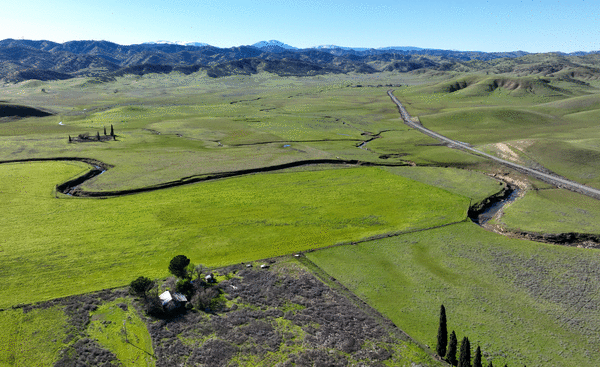
State officials have approved the final key permit needed to build the largest new reservoir in California in 50 years, a project supporters say will supply water to millions of Californians from the East Bay and Silicon Valley to Los Angeles to reduce the impacts of droughts, but which opponents worry will harm the environment.
On Wednesday night, the State Water Resources Control Board voted 5-0 to provide water rights to Sites Reservoir.
The proposed 13-mile-long off-stream reservoir would be built in rural ranchlands in Colusa County, 70 miles northwest of Sacramento near the town of Maxwell. With two earthen dams, each 300-feet high and 9 other smaller dams 20 to100 feet high, the project would divert water from the Sacramento River during wet winter months to supply water to 24 million Californians and 500,000 acres of farmland in the Central Valley during dry periods.
Estimated to cost $6.2 to $6.8 billion, the plan is designed to offset climate change, which threatens to melt the state’s Sierra snowpack earlier in the coming decades, and which has resulted in hotter summer weather and wetter winter storms as warming oceans evaporate more moisture into the atmosphere.
“We’re living with more extreme droughts and floods, and a growing need to store water during wet periods. Sites is built for exactly that,” said Joaquin Esquivel, chairman of the state water board.
If completed, Sites would be the largest new reservoir built in California since 1979, when the federal government opened New Melones Lake in the Sierra Foothills between Sonora and Angels Camp. It would hold 1.5 million acre-feet of water, enough for the annual use of at least 7.5 million people.
“California can’t afford to keep waiting for the water storage we need,” said Gov. Gavin Newsom, who appointed the water board members. “From 2020 to 2022, California went through its driest three-year period on record, followed by nine atmospheric rivers in just three weeks. That’s the reality we’re up against.”
It would become the 8th-largest reservoir in the state, nearly 10 times the size of Los Vaqueros Reservoir in Contra Costa County and four times the size of Hetch Hetchy in Yosemite, the main water supply for San Francisco and much of the Bay Area.
“The approval shows California can get big infrastructure projects moving again,” Newsom said. “Now it’s time to get shovels in the ground.”
Critics of the project include some environmental groups, who sued unsuccessfully in 2024 to block it on the grounds that it would harm fish and wildlife by diverting water from the Sacramento River that otherwise would flow into the already heavily pumped Sacramento-San Joaquin River Delta.
They asserted that the project won’t deliver as much water as other options, including increased conservation, water recycling and expanded groundwater storage.
“The Sites Reservoir project makes no sense,” said Keiko Mertz, policy director of Friends of the River, a group based in Sacramento. “It costs billions, delivers a trickle of new water, and threatens the health of the Sacramento River and San Francisco Bay-Delta. If the project can’t pencil out without sacrificing environmental protections and destroying sacred tribal resources, it shouldn’t be built.”
Some native tribes also opposed it.
“If this reservoir goes through,” said Amanda Mitchum, of the Cachil DeHe Band of Wintun Indians, “you will literally be covering up the footprints and trails that my father walked with his mother, he walked with me and I walk with my children. That will all be gone.”
The project has been debated and discussed for 60 years. Construction is set to begin by next July, said Jerry Brown, executive director of the Sites Project Authority, and will be completed in 2034.
Planners had to obtain 45 different permits from state, federal and local officials over the past 8 years, added Brown, the former general manager of the Contra Costa Water District, calling securing the right to divert water from the Sacramento River the last significant hurdle.
“It’s a major milestone,” said Brown on Thursday, who is no relation to the former governor of the same name. “If you don’t have water to put in the reservoir, you don’t have anything. So achieving that is foundational to moving the project forward.”
The next step, he said, is for the 22 water agencies from around the state that have helped provide planning funding to sign agreements in the coming months about how much each will pay and how much water each will receive.
Those partner agencies include the Santa Clara Valley Water District in San Jose, Zone 7 Water Agency in Livermore, Metropolitan Water District in Los Angeles and others. There are 16 other agencies on a waiting list.
In addition to the Newsom administration and both of California’s U.S. senators, the project received funding and loan guarantees from the Biden administration and support from the Trump administration. It also was supported by unions and business groups.
“Millions of Bay Area residents can take comfort that the action by the State Water Resources Control Board will help ensure the reliability of our water supply for decades to come,” said former Oakland Mayor Libby Schaaf, president and CEO of the Bay Area Council, an organization representing 400 of the largest employers in the Bay Area.
A key part of the project’s funding will be $1.3 billion from Proposition 1, a water bond approved in 2014 by California voters during a major drought for new water projects. Another $1.3 billion is coming from the federal government. The rest will be paid by water agencies that help fund the project.
The permit issued Wednesday night allows a maximum of 986,000 acre-feet of water to be taken a year, between November and June, and when the river is running at 10,900 cubic feet per second or more. In summer months, it flows at about 3,000 cfs, and in winter can exceed 100,000. On average, planners say they will be taking 3% to 4% of the water flowing through to the Sacramento River that goes to the Delta and eventually the Pacific Ocean.
In average years, the reservoir will take 6 years to fill, Brown said. But had it been built already, it would have filled in two years during the wet winters of 2022-23 and 2023-24, he said.
“This is the start of a new beginning for California water,” Brown added.
_____
©2026 MediaNews Group, Inc. Visit at mercurynews.com. Distributed by Tribune Content Agency, LLC.






Comments