Poll: Cuban Americans in Miami-Dade back 'maximum pressure' on Havana but reject deportations
Published in News & Features
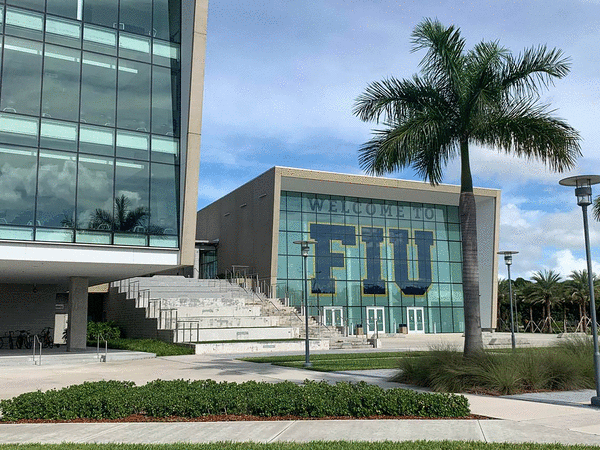
MIAMI — Cuban Americans in Miami-Dade County strongly support the U.S. government’s hardest push in decades to bring down the regime in Havana, but oppose the Trump administration’s immigration agenda when it affects Cubans living in South Florida, according to a new poll conducted by Florida International University.
The poll lands a few days before Tuesday's midterm elections, and shows Cuban-American support for Republicans holds strong despite opposition to the deportation of Cubans in the U.S. back to the island. A majority of respondents, 60%, say they will vote for the Republican candidate for Congress, though many remain undecided in the U.S. Senate and governor’s races.
According to the survey, a majority of Cuban Americans, 63%, support President Donald Trump’s handling of Cuba policy as well as other international issues such as relations with Russia and China, but the economy is a weaker spot: Cuban Americans split almost evenly on the administration’s handling of it: 47% support and 48% oppose.
Seventy-five percent of respondents said they favor emphasizing “maximum pressure” on the Cuban government, 63% favor the cut-off of oil exports to the island, and 72% support U.S. military action to overthrow the Cuban government. Sixty-seven percent approve keeping Cuba on the U.S. list of state sponsors of terrorism, and 57% see Cuba as a threat to vital U.S. interests, according to the poll.
Yet 74% disapprove of increased deportations of Cuban nationals who have no criminal record, with 61% saying they disapprove strongly. An overwhelming majority, 87%, say the government should resume processing immigration benefits for Cubans already in the United States.
The phone survey of 1,004 Cuban Americans, the community’s longest-running poll, was conducted in September and has a margin of error of plus or minus 3.1 percentage points. Some of the figures released by FIU only include those who expressed an opinion and excludes those who responded “don’t know.”
Pressure on the government, not Cubans
One of the poll’s central findings is that the Cuban-American community wants both “carrot and stick” policies on Cuba at the same time, but “mostly a stick,” FIU sociologist Guillermo Grenier, one of the poll directors, said at a presentation of the results.
Support for the decades-old U.S. embargo on the island remains high, at 56%. Among those who expressed an opinion, Republicans favor it at 79%; Democrats oppose it, with only 23% in favor.
The report’s trend chart, which counts only those who expressed an opinion, shows support for continuing the embargo has hovered around 60% since 2020, up from a low of 34% in 2016, near the end of the Obama administration.
“Leadership matters,” Grenier said. The community’s view of the Cuban government didn’t change during the Obama years, he said, but the opening “opened up a new way of kind of challenging the Cuban government.”
Fifty-seven percent favor maintaining diplomatic relations, and the community splits 50% to 48% on whether there should be unrestricted travel to Cuba for all Americans.
Sixty-seven percent agree the United States should emphasize policies that improve the economic well-being of the Cuban people, and 74% back the current Trump policy of maximum pressure on the government.
Grenier said he deliberately used the word “blockade” in the poll questionnaire in reference to the oil cutoff imposed by the Trump administration on Cuba since the beginning of the year, even though Secretary of State Marco Rubio has said there is no blockade “per se.”
“Anytime you start using per se, that’s like putting lipstick on a pig,” he said. “I call that blockade, and everybody understands what I’m talking about.”
Seventy-one percent of poll respondents said they favor “unrestricted” sales of medicine to Cuba and 69% favor “unrestricted” sales of food. The embargo allows exports of food and medicine to the island but imposes requirements, such as advance payments on food sales, because of the Cuban government’s poor credit history. U.S. companies selling medicines to Cuba need to file paperwork showing their products will be used for healthcare. Sometimes companies refused to sell to Cuba, even if it is allowed, fearing sanctions, a phenomenon called “overcompliance.”
Seventy-one percent of poll respondents favor U.S. assistance to Cuba’s private sector to relieve the ongoing humanitarian crisis.
Confidence in regime change, and in force
Sixty-six percent of those polled believe maximum pressure from the U.S. will bring about regime change in Havana. Among those who answered the question, Republicans, at 81%, and non-citizens, 82%, are the most confident, Democrats the least at 37%.
Among those who expressed an opinion, support for U.S. military action against the regime reaches 87% among Republicans and 84% among Cubans who arrived after 2020. Democrats oppose it, with 50% saying they are strongly against it.
Asked what kind of action against the regime they would support, 40% of all respondents chose a clandestine operation by the CIA or some other secret activity. Another 25% chose bombing selected military targets, 13% a land invasion and 14% all of the above. Fewer than 1% support bombing urban areas.
Cuban Americans’ appetite for a U.S. deal with the current Cuban government is limited. Two-thirds, 66%, approve easing sanctions in exchange for Cuba moving to a free-market economy within two years. But 79% reject any arrangement that leaves the current government in power in exchange for free-market reforms.
Opposing deportations
One of the key poll findings is the widespread rejection of the Trump administration immigration agenda when it affects Cubans in South Florida and their relatives on the island.
“This should not be a surprise,” Grenier said. “Everybody’s against it.”
Even among Republicans who shared an opinion, 63% disapprove of increased deportations of Cubans with no criminal record. And among those who arrived after 2020 and answered the question, 92% strongly disapprove.
The administration has deported about 8,500 Cubans since Trump returned to office in January 2025, according to a Human Rights Watch estimate through August of this year.
The Department of Homeland Security also ended a humanitarian parole program for Cubans, Haitians, Nicaraguans and Venezuelans in March 2025. That stripped them of protection from deportation and of the ability to renew their work permits.
In November 2025, the administration also froze final decisions on immigration applications from nationals of countries banned from traveling to the U.S., including Cuba. That covered green cards, naturalization and other petitions, including residency applications under the 1966 Cuban Adjustment Act. As a result, the administration approved only 139 Cuban Adjustment Act residencies between April and June 2026, compared with almost 50,000 in the same period in 2024, according to government records. A federal judge in Rhode Island struck down the freeze on June 5, 2026. U.S. Citizenship and Immigration services told Miami U.S. Rep. María Elvira Salazar in a July letter that it was lifting the remaining holds on Cuban and Venezuelan cases.
Agreement on resuming immigration benefits crosses party lines. Among those who expressed an opinion, 86% of Republicans, 90% of Democrats and 86% of Independents agree.
Those numbers also show that many Cuban Americans still have family on the island. Seventy-one percent have close relatives in Cuba, including an overwhelming majority, 92%, of those who arrived in the United States after 2020. Fifty-nine percent said they sent food or other goods to the island in the past year, and 43% sent money.
Few Cuban Americans said they plan to return to live on the island even if there are significant changes. Sixty-nine percent said they are not at all likely to return to live in Cuba if its economy were to improve. And even if the island’s communist government were to fall, 63% said they would still not return.
The midterms
Eighty-nine percent of respondents said they are U.S. citizens, and 95% of citizens said they are registered to vote. Fifty-two percent said they are registered as Republicans, 27% as independents and 17% as Democrats.
The disagreement with the administration on immigration isn’t likely to cost Republicans many Cuban-American votes, Grenier said. “Being a Republican is kind of an identity thing with Cuban Americans,” he said. Opinions and party “don’t track perfectly, but at the polls they do.
“Trump’s not on the ballot; it’s the Republican Party,” he added. “A lot of Cubans that I know are still going to vote Republican. They hate Trump, but they’re holding their nose.”
The youngest voters are a different story. Respondents under age 40 who answered the question are split in party registration: 40% are registered as Republicans, 34% as independents and 24% as Democrats.
In Florida’s U.S. Senate race, Republican incumbent Ashley Moody leads Democrat Angela Nixon among Cuban Americans polled, 28% to 14%, with 44% undecided. In the governor’s race, Republican Byron Donalds leads Democrat David Jolly 37% to 15%, with 39% undecided. Sixty percent of respondents said they will vote for the Republican running in their congressional district.
The Democratic Party “has a rough row to hoe here,” Genier said. “The Republican Party earned its stripes here. Democrats have got to play that long game if they want to really see that number change.”
Looking to the 2028 presidential race, Rubio, the Miami-born Cuban-American secretary of state and former U.S. senator, is the choice for 51% of respondents for the Republican nomination.
“Once the rubber meets the road, it’ll be Rubio all the way,” Grenier said.
Cuba policy
Unlike in past versions of the survey, Cuba policy ranks higher on the list of voters’ concern, likely mirroring the attention the Trump administration is giving to the island.
The FIU pollsters usually find that “Cubans don’t necessarily vote on Cuba policy,” Grenier said. Respondents ranked the U.S. economy and health care as the most important issues they care about, followed by immigration and Cuba policy. Cuba policy ranks third among respondents 76 and older.
Cuba’s fourth-place ranking is higher than usual. “Cuba climbed,” Grenier said. “Most of the time, Cuba is like fifth or sixth in priorities.”
Party affiliation, generational divides, place of birth and arrival date to the United States remain significant to understanding divides in the Cuban American community.
Of those who expressed an opinion, majorities of respondents under 40 and those born outside Cuba favor negotiating with Cuba’s leadership. Republicans and those who left the island before 1995 give the strongest support to pressure and military action.
“These are old fault lines,” the researchers wrote in their report, “and the poll finds them intact.”
©2026 Miami Herald. Visit at miamiherald.com. Distributed by Tribune Content Agency, LLC.





Comments