The most vulnerable senators of 2026 less than a week before Election Day
Published in News & Features
WASHINGTON – When CQ Roll Call first published this list for the 2026 election cycle a year and a half ago, Georgia Sen. Jon Ossoff was ranked the most vulnerable incumbent senator.
Things have changed. Just under a week out from Election Day, Ossoff now sits at the tail end of the rankings. Inside Elections with Nathan L. Gonzales rates his reelection race as Lean Democratic, and major outside groups from both parties have pulled their ad spending from the state in recent weeks.
Ossoff’s drop is among a few changes we’ve made as we revisit this list for the final time before the midterm elections. The Senate battleground has remained relatively stable since the end of last month, with control of the chamber on the line. Democrats need a net gain of four seats to win the majority — a prospect that looked highly unlikely for much of the cycle.
The top four most vulnerable incumbent senators — Jon Husted of Ohio, Susan Collins of Maine, Dan Sullivan of Alaska and Roger Marshall of Kansas — are the same as our list from a month ago. While Husted, Collins and Sullivan have been in competitive races all year, Democrats continue to see deep-red Kansas as a pickup opportunity, and Inside Elections shifted the race rating in Democrats’ direction earlier this month.
Other incumbents on this list, such as South Carolina’s Darline Graham and new entrant Cindy Hyde-Smith of Mississippi, face tougher-than-expected paths to reelection but remain favored to hold their seats. Still, their inclusion illustrates the tough environment Republicans find themselves in as they defend seats in deep-red territory that weren’t expected to be part of the battleground two years ago.
Nebraska’s Pete Ricketts remains on the list but falls a spot to No. 7 as the Republican appears to be in a stronger position to defeat independent Dan Osborn.
Races for a half-dozen open seats, which are not included on this list of vulnerable incumbents, will also be crucial to determining Senate control. Republicans have pickup opportunities in Michigan, Minnesota and New Hampshire, while Democrats are seeking to flip seats in Iowa, North Carolina and Texas.
CQ Roll Call compiled these rankings based on interviews with party insiders, analyses of polls, campaign finances and independent expenditures, race ratings by political handicappers and candidates’ past performances.
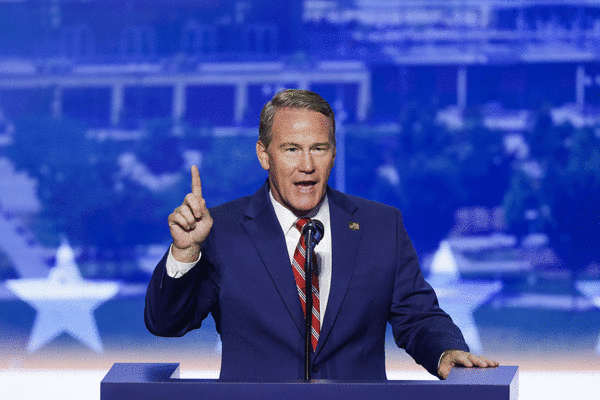
The Ohio Senate race has become a big money brawl between Husted, who was appointed to fill Vice President JD Vance’s remaining term, and Democrat Sherrod Brown, who served three Senate terms before losing to Republican Bernie Moreno in 2024. Brown raised a staggering $68.4 million through mid-October to Husted’s $19.9 million. Outside groups are investing heavily in the race, with crypto-related super PACs opposed to Brown among the top spenders. The outcome of the Senate race, as well as the gubernatorial contest, could signal whether Ohio will shift back to swing-state status for 2028.
Collins’ race against former state Senate President Troy Jackson remains tight, as she once again seeks to defy Maine’s Democratic tilt and win a record sixth term. The pair recently met for a series of heated debates, in which Collins touted her independence and track record of bringing federal dollars back home, while Jackson sought to tie her to President Donald Trump and underscore that Maine could influence which party controls the Senate. In a final ad released Tuesday, Jackson said he owes “nothing to the billionaires or Trump,” while a spot from Collins and the National Republican Senatorial Committee late last week highlighted Jackson saying, “Oh, shut up,” during a debate.
Sullivan faces the same challenges other GOP candidates are confronting this year. But he’s also up against a high-profile Democratic challenger, another rival sharing his name and Alaska’s ranked choice voting system. There will be four candidates on the November ballot: Dan S. Sullivan, the GOP incumbent; Democratic former Rep. Mary Peltola; retired teacher Daniel J. Sullivan Jr., listed with no party affiliation; and Republican Gerald Heikes, a perennial hopeful. Last week, the Justice Department took the unusual step of filing a lawsuit arguing that the “other” Dan Sullivan’s presence on the ballot would justify a delay in certifying the race if the incumbent loses.
Kansas hasn’t elected a Democratic senator since 1932, but Marshall is under pressure on multiple fronts as he seeks to turn back Democrat Adam Hamilton. The war in Iran and Trump’s tariffs are pushing up the cost of diesel fuel and fertilizer in this farming state. Marshall, a physician, also came under fire after The New York Times reported that his medical practice sued hundreds of patients for nonpayment of debts. Marshall and his supporters have cast Hamilton, pastor of the nation’s largest United Methodist congregation, as too liberal for the state, though the Democrat boasts endorsements from Republican former Govs. Mike Hayden and Bill Graves.
Graham, who was appointed over the summer to fill the remaining term of her late brother, Lindsey Graham, is locked in an unexpectedly close race with Democratic pediatrician Annie Andrews. South Carolina remains a deep-red state, and the incumbent has Trump’s backing as she seeks a full six-year term. But a political climate unfavorable to the GOP, combined with Graham’s lack of name recognition and political experience, are factors that have landed her on our list. Republican Rep. Ralph Norman, who lost a bitter primary runoff to Graham, told Fox News on Tuesday that Trump was trying to “force a candidate” on South Carolina voters.
Hyde-Smith makes a late cycle debut on the list as her challenge from local district attorney Scott Colom heats up, though the limited polling of the race shows the incumbent ahead. The top Senate super PACs of both parties have recently gone up on air, while Trump and Kamala Harris have both visited the state in the past week. Democrats haven’t won a Senate race in Mississippi since 1982. To score an upset, Colom would need high turnout from Black voters, who Democrats believe are energized after the Supreme Court ruling weakening the Voting Rights Act, and also win over a certain chunk of Republican voters.
After narrowly losing to Republican Deb Fischer two years ago, independent Dan Osborn is now challenging Ricketts, a former two-term governor and one of the wealthiest members of Congress. Osborn, a former union leader, has leaned into economic populism, casting Ricketts as an out-of-touch nepo baby. After Republicans circulated leaked audio of Osborn disparaging rural Trump voters, the independent candidate apologized. Despite Ricketts’ personal wealth, he’s getting an outside boost from the crypto-related Defend American Jobs super PAC. While there’s no Democrat on the ballot, Osborn could be hurt by the presence of three third-party candidates, though one has since dropped out and endorsed him.
Since topping our initial list of the most vulnerable senators, Ossoff has seen nearly everything go right for him. He raised an eye-popping $136.6 million through Oct. 14, swamping his Republican rival, Rep. Mike Collins, who brought in $10.7 million. Polls show him consistently in the lead. Collins has been dogged by a House Ethics inquiry and reports that his son-in-law shared antisemitic and white nationalist social media posts. At this point, the GOP’s main hope is that Ossoff somehow gets less than 50%, forcing him into a Dec. 1 runoff that could draw big spending if Senate control is on the line.
—Ryan Kelly contributed to this report.
©2026 CQ-Roll Call, Inc., All Rights Reserved. Visit cqrollcall.com. Distributed by Tribune Content Agency, LLC.




Comments