'I prefer a private room': Phone calls pull back curtain at City Hall in trial of ex-Oakland Mayor Sheng Thao
Published in News & Features
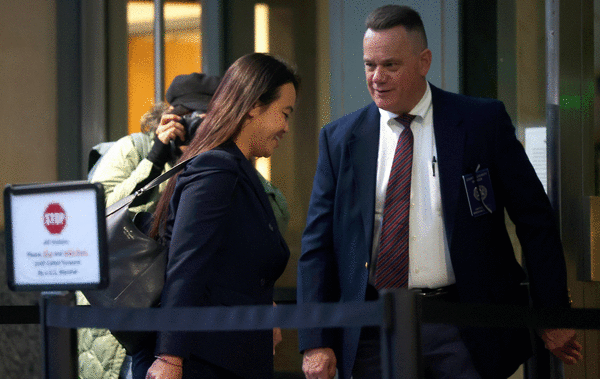
OAKLAND, Calif. — Fresh out of a closed-door City Council meeting in April 2019, then-Oakland Council member Sheng Thao was upset and wanted to strategize about what she had just heard.
She dialed Andy Duong, the well-connected scion helping to run the city’s recycling contractor, and allegedly revealed the city’s private legal strategy in a yearslong court battle with a business whose leaders “we really don’t want to be seen with,” according to testimony aired in the ex-mayor’s corruption trial.
The call was among the most dramatic pieces of evidence admitted in recent days as prosecutors have presented their corruption case against Thao, Duong and two other co-defendants. That process continued Monday, as defense attorneys spent hours cross-examining the FBI’s lead investigator on the case, Katherine Barclay, and her findings about the quartet.
The four defendants each face numerous conspiracy and fraud charges in an alleged scheme to sell access to City Hall in exchange for thousands of dollars in under-the-table payments. Prosecutors claim the conspiracy began in October 2022, and was revised in March 2023 during a meeting held by the four co-defendants and a fifth alleged conspirator at a back table of a waterfront Berkeley restaurant.
All of the defendants – including Thao’s romantic partner, Andre Jones, and Andy Duong’s father, David Duong – have pleaded not guilty.
Taken together, Thao’s phone conversation and other audio recordings and texts aired before jurors in recent days offer a rarely-seen peek into the relationships and alliances taking place behind the scenes at Oakland’s City Hall. Unbeknownst to Thao, Duong was secretly recording each conversation, in what federal prosecutors now say was a routine and prolific practice by the young businessman to gather dirt on most anyone he met with political power.
The April 2019 call revolved around a lawsuit filed two years earlier by Oakland against California Waste Solutions, the city’s longtime recycling contractor, regarding alleged overcharges in curbside collection practices. The litigation – which spurred a countersuit by the recycling company – resulted in a $6 million settlement, along with a commitment by CWS to vastly reduce its fees for a premium collection service.
In the call, Thao could be heard urging Andy Duong to gather materials that would support the company’s position in the litigation, given that some other council members had voiced a desire for the company to refund residents – and not just change its business practices – as part of any possible settlement.
The materials were suggested for a meeting the following day at a restaurant involving Thao, Duong and other unnamed individuals. Toward the end of the call, Thao voiced concern about where that meeting would be held, and if anyone would spot her with the Duong family.
“I prefer a private room because we don’t really want to be seen with you guys,” Thao said on the recording.
Defense attorneys lost a bid ahead of trial to keep the recording from being played to the jury, amid arguments from prosecutors that it highlighted Thao’s and Andy Duong’s “deep and long-term relationship.”
In cross-examination Monday, Thao’s attorney elicited testimony about how lawsuit mentioned in the call was unrelated to the alleged conspiracy at the heart of the trial. The attorney also repeatedly questioned the special agent on whether Thao knew she was being recorded by Andy Duong.
“Was there any part of that call in which Sheng Thao asked Andy Duong for money?” asked the attorney, Jeff Tsai.
“No,” the special agent answered.
The 2019 phone call is particularly notable given state laws governing what can, and cannot, be shared from the types of meeting Thao had just attended.
Closed sessions of legislative bodies are highly regulated affairs and closed off to the public, typically so that city leaders can discuss legal strategy and employment disputes freely.
Council members are generally barred from sharing details aired in those meetings, according to state government laws. If any decisions are made in those sessions, then the results of those votes – such as whether to accept a settlement in a lawsuit, and how much taxpayers might pay for it – must be subsequently reported to the public.
Generally speaking, closed sessions are “supposed to be a private space where council members can have frank discussions about what’s before them,” said Davina Hurt, director of government ethics at the Markkula Center for Applied Ethics at Santa Clara University. “Anytime someone discloses what happens, it jeopardizes the case, it weakens the position of the city and it costs taxpayers.”
Thao appears to have remained in contact with Andy Duong in the years that followed, and he kept recording his conversations.
In a September 2023 call that was also recently played before jurors, Thao railed about Council members Janani Ramachandran and Treva Reid, and told Andy Duong that he needed to be careful about his allegiances.
She specifically warned Andy Duong not to invite Reid “to anything that even sounds cool need cq”, adding “F*** Treva, dude, I’m so sick of Treva.”
“You’re going to have to fucking pick and choose, because I’m not f****** with those bitches,” Thao told Andy Duong. “They don’t do any favors for me at all.”
_____
©2026 MediaNews Group, Inc. Visit at mercurynews.com. Distributed by Tribune Content Agency, LLC.





Comments