The next generation of hybrids won't need much fuel
Published in News & Features
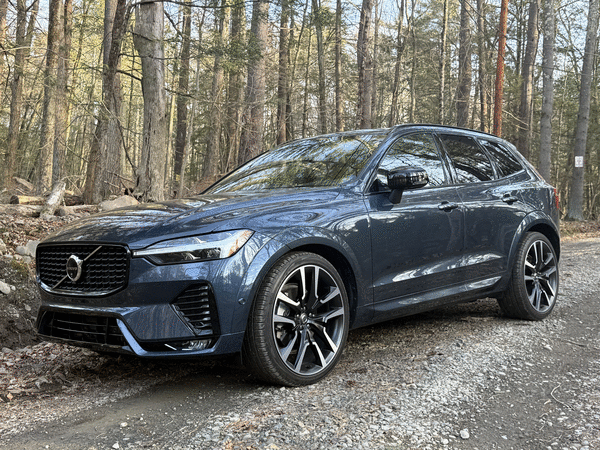
Sara Gray buys gas once a month.
Her 40-mile commute to work is entirely electric in her Volvo V60 plug-in hybrid. Gray, director of arts at California’s Monterey Museum of Art, only relies on the car’s combustion engine for longer weekend road trips up the coast or to see her parents in Reno, Nevada.
“This was kind of a happy medium” between an EV and a fully gasoline-powered car, she said. Gray’s Volvo, a 2025 model, goes farther on battery power alone than all but a few other hybrids on the market.
A new generation of plug-in hybrid vehicles will soon be able to cover even the longer trips on batteries alone. The standard 30 miles or so of electric range will be pushed close to 50, analysts expect, and the top performers, including two models just unveiled by Volvo Car AB, will travel about 50% farther than that before the gas engine kicks on.
“I wouldn’t call it an arms race, but there’s definitely a push,” said Peter Nagle, associate director of Americas demand forecasting at Mobility Global, an industry research group. “They’re for the consumer who wants to have that improved fuel economy and does plan to take these vehicles on long trips.”
Sales of fully electric vehicles surged with federal incentives, then faltered in the U.S. after federal incentives expired in September. Auto executives, who spent years investing heavily in batteries and electric motors, have since been struggling with a simple question: Do drivers want to ditch gas or not? With long-range hybrids, they may not need an answer after all — or at least not as urgently, according to Nathan Niese, global lead for electric vehicles at Boston Consulting Group. The models will appeal to anyone stung by recent gas prices — the EV-curious and EV-skeptical alike.
“We are seeing this to be a very durable category,” Niese said. It is a clear option for executives “to extend the platform life of the investments they’ve already made.”
Potential savings on both gas and carbon emissions add up quickly. The typical American commute is 27 miles round-trip, and once errands and other trips are considered, U.S. drivers put in about 38 miles a day on average. Longer-range hybrids cancel combustion engines for nearly all of that, even if they are only plugged in at night or every other day.
Next year, Volvo’s XC60 — the SUV version of Gray’s car — will go almost twice as far on electrons. The company is fitting the machine and its larger SUV sibling, the XC90, with batteries that have roughly twice as much capacity as the current models, extending their electric-only range to almost 80 miles. The goal, according to Luis Rezende, president of Volvo Car Americas, is to let the spark plugs and cylinders sleep on pretty much everything but road trips.
Rezende reckons the long-range bragging rights will not only swipe customers from luxury rivals but help the company hit its electrification goal: 60% of sales to be fully or partially battery-powered by 2030.
“I really believe this is going to be a conquest car,” Rezende said of the XC60. “Customers who were not there yet in their minds to go electric, they will jump to this.”
Volvo says long-range hybrids will also catalyze sales of its fully electric machines. Almost one in four people driving a plug-in hybrid transitions into an EV, according to Mobility Global.
Mercedes-Benz Group AG is also long on long-range hybrids. It currently sells five plug-in models in the US, including the GLC 350e, which can travel 54 miles on battery power. In part because of the new plug-ins, one in four Mercedes sold in the recent quarter was electrified, according to Greg Gates, vice president of sales at Mercedes-Benz USA.
“Our focus is not on pursuing a specific range number for its own sake,” Gates said. “The goal is to make electric driving practical and convenient.”
To some extent, carmakers are riding a technological tailwind. As scientists develop cheaper, more efficient batteries, auto executives can push their hybrids farther for the same cost, said Niese. Range figures for virtually all hybrids are ticking higher, though there is a race among carmakers to nab the record for the longest distance.
“The U.S. population has been conditioned that range matters,” Niese said. “So there will be a portion of the population that sees 80 (miles), compares it to 50, and says, ‘That’s obviously better.’ ”
That said, combining a gas engine with a large battery and motor is an expensive exercise. A plug-in hybrid, generally, costs $5,000 to $15,000 more than a conventional hybrid in the same class.
Because of the steep sticker prices, plug-in hybrids are still just a tiny slice of the U.S. auto market, about 1% of sales. Mobility Global expects that number to grow, but not by much. It forecasts a plug-in peak at around 4% of U.S. car sales sometime in the mid-2030s.
“The biggest roadblock here, in my mind, is always going to be the pricing of these options,” Nagle said.
At the moment, Volvo’s plug-in XC60 has a starting price of $67,600, a tad more than the fully electric EX60, and almost one-third more than its hybrid sibling, which doesn’t have a charging port and gets about 26 miles per gallon.
The company hasn’t said how much either of its new hybrid models will cost.
©2026 Bloomberg L.P. Visit bloomberg.com. Distributed by Tribune Content Agency, LLC.






Comments