United Nations renews Haiti sanctions, panel of experts, but adds no new names to blacklist
Published in News & Features
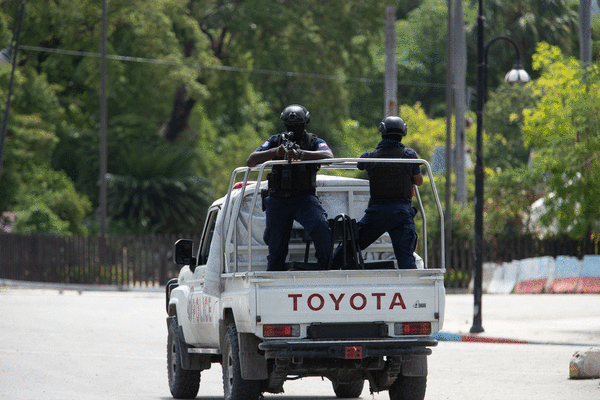
The United Nations Security Council has renewed travel bans, asset freezes and arms embargo measures for Haiti for another year, but added no new names to its sanctions blacklist, despite a damning report detailing allegations of political figures’ involvement in fueling the country’s deadly gang crisis.
The council also extended the mandate of its Panel of Experts on Haiti by 13 months, giving investigators more time to examine the forces driving the Caribbean nation’s surging violence and identify individuals who could face international sanctions. The panel is required to submit an interim report to the council by March 28, 2027, and a final report by Sept. 1, 2027.
The sanctions resolution passed 14-0 on Wednesday, with Russia abstaining. While member nations said the vote reflected the international community’s collective effort to restore peace and stability in Haiti, diplomats’ statements after the vote exposed the divisions over the group’s failure to impose additional sanctions, particularly on individuals accused of financing gangs and profiting from the country’s instability.
There appeared to be little appetite especially among some of the five permanent members to mount a new fight after having just pushed through a six-month renewal of the U.N.-authorized Gang Suppression Force. Previous efforts to designate new people to add to the sanctions list, which currently contains mostly gang members, has encountered resistance from China and Russia.
“Russia’s position during the vote is in no way motivated by a desire to protect corrupt officials or to demonstrate a particular attitude vis-à-vis the Haitian political elite,” Vasily Nebenzya, the country’s representative, said. “We are of the understanding that in the context of the extremely fragile political process in the country, any external interference in it can only exacerbate an already complex situation.”
New sanctions criteria related to people accused of misappropriation, embezzlement and diversion of public resources risks reshaping the country’s political landscape in the interests of outside players, he added.
Still, Nebenzya said he had to agree with the panel’s latest assessment that “the sanctions regime is highly ineffective.”
Panama, which co-drafted the resolution with the U.S., had a different position. The country’s representative, Eloy Alfaro de Alba said “to tackle violence in Haiti, it is pivotal to also tackle the networks that allow the gangs to perpetuate and expand their criminal activities.”
He added: “It is necessary to embrace the recommendations of the panel of experts and to forge ahead with including new individuals on the list of sanctions, particularly those who, using positions of power and influence, contribute to the financing of these structures and turn a profit from their criminal activities.”
The United States, through representative Jennifer Locetta, said Washington will continue to consider designations through the Security Council.
As in the past, members of the council said they were concerned by the continued flow of illicit arms into Haiti, with Russia and China calling on the U.S. to make a stronger effort to stop it.
In its report, the panel said while Haitian authorities have cooperated and shared information on cases of transnational trafficking, the U.S. had yet to respond to tracing requests. The panel also said that since its formation in 2022 it has noted a clear shift in the caliber of firearms used by gangs. Artisanal weapons and revolvers have been increasingly relegated to rural areas, smaller criminal groups and individuals, while over the past two years gangs have been procuring larger numbers of more lethal weaponry.
“The most sought-after firearms are currently .50 caliber rifles, which, while still circulating in limited quantities, are already present within certain gangs,” the panel said. “During the reporting period, privately made firearms were also documented as part of arms embargo violations, reflecting a developing trend as previously reported by the Panel.”
©2026 Miami Herald. Visit at miamiherald.com. Distributed by Tribune Content Agency, LLC.






Comments