Kansas will criminalize unlawful approach of officers; incentivize ICE partnerships
Published in News & Features
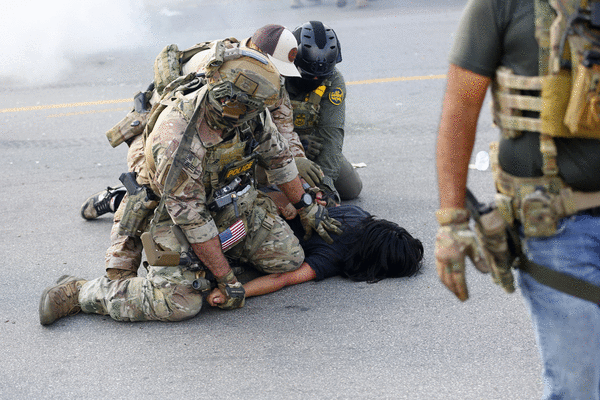
A Kansas bill encouraging local coordination with federal immigration authorities and empowering police to arrest anyone who distracts officers by getting too close for comfort will become law over the objection of Gov. Laura Kelly.
The House overrode the veto 85-38 on Thursday afternoon, and the Senate followed suit several hours later by a vote of 31-9.
The legislation removes the requirement that sheriff’s offices obtain permission from county commissioners before entering into agreements with ICE. It was opposed by every Democratic lawmaker but supported by GOP supermajorities in both chambers.
“I know that many of you here have very diverse communities who you deeply care about. I want you to consider how bad this bill really is,” said Rep. Heather Meyer, an Overland Park Democrat, before the override. She argued that it would erode trust in local law enforcement.
“People will just stop reporting crimes because they are afraid of getting involved with ICE,” Meyer said.
First Amendment advocates warn that the legislation will give law enforcement officers broad, subjective power to arrest people whom they deem to be distracting them from carrying out their duties or putting people or property at risk. The buffer zone will apply to all first responders, including ICE agents and other federal officers.
In her veto message, Kelly said the bill creates “serious tension between ensuring law enforcement officers can carry out their duties while respecting the First Amendment rights of Kansans to observe and record their actions.”
Unlawful approach of a first responder will be a misdemeanor offense punishable by a fine of up to $1,000 and up to six months in jail.
The text of the soon-to-be law says someone can be arrested only after receiving “a visual or audible signal not to approach or remain within 25 feet” of a first responder. Only state or local law enforcement will have the authority to arrest someone for unlawful approach, it says.
“This is not an ICE bill. But it sure got turned into one pretty quick,” said Rep. Tom Kessler, a Wichita Republican who made the motion to override Kelly’s veto. “This bill is about protecting our law enforcement officers and our first responders.”
The first version of the unlawful approach bill was introduced by Senate President Ty Masterson, an Andover Republican and gubernatorial candidate, shortly after two Minneapolis residents were killed by federal immigration officers.
During a March hearing, Ed Klumpp, a lobbyist for various Kansas law enforcement groups, said the bill would allow local officers to “step in and deal with those people creating that interference,” like “what’s happening up in Minnesota.”
Legal liability for wrongful detention
Rep. Susan Ruiz, a Shawnee Democrat, made the point during Thursday’s floor action that more than 40 immigrants have died in federal custody since the beginning of President Donald Trump’s second term.
Under the structure of the agreements that local law enforcement agencies enter into with ICE, legal liability is shared between federal and local agencies. According to ProPublica, more than 18,000 immigrants filed federal lawsuits alleging wrongful detention between January 2025 and February 2026.
“Homeland Security now sees that this is adding up for them, so they informed the sheriff’s departments that they are no longer going to financially back them up,” Ruiz said.
ICE is responsible for paying certain damages when a court finds that an immigrant has been detained unlawfully, but deputized local agencies have also been required to make significant payouts for their role in wrongfully detaining immigrants with legal status in the U.S.
The Kansas legislation will shield local agencies and individual officers from civil liability while deputized on behalf of ICE, requiring the attorney general’s office to represent agents and officers implicated in civil rights lawsuits stemming from ICE action, and requiring the state to pay for ensuing damages not covered by the federal government.
According to the attorney general’s office, the expected caseload associated with immigration-related litigation would require Kansas to hire another assistant attorney general at $133,905 for salary and benefits in 2027, the bill’s fiscal note says.
The bill will also codify in statute that sheriff’s offices can detain suspected noncitizens for up to 48 hours after they would otherwise be released from custody upon the request of federal immigration authorities. Many Kansas sheriff’s offices already honor detainer requests from ICE, but doing so is voluntary, and nothing in the legislation would make it mandatory.
©2026 The Kansas City Star. Visit at kansascity.com. Distributed by Tribune Content Agency, LLC.





Comments