ULA launches Atlas V on latest Amazon satellite mission
Published in News & Features
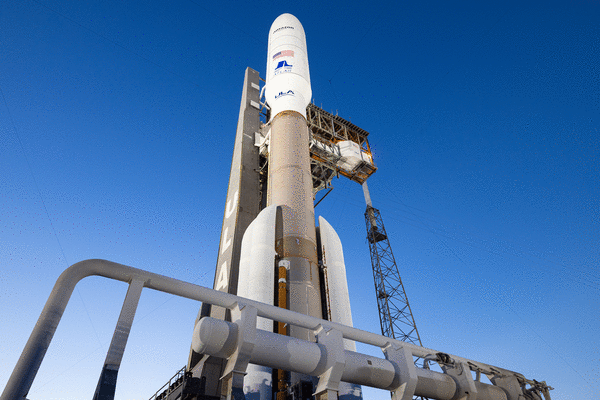
ORLANDO, Fla. — United Launch Alliance managed its second mission of the year early Saturday with one its few remaining Atlas V rockets on the latest trip to put up more Amazon satellites into orbit.
The rocket lifted off from Cape Canaveral Space Force Station’s Space Launch Complex 41 at 1:46 a.m. with 29 more broadband satellites for Amazon’s growing constellation.
ULA pivoted to using one of its 10 Atlas V rockets left after its new Vulcan rocket had a problem on launch back in February. One of the Vulcan’s solid rocket boosters, which are provided by Northrop Grumman, had a nozzle burn off on liftoff, although the powerful BE-4 engines of Vulcan’s first stage built by Blue Origin were able to get the rocket to its intended orbit.
The issue pushed the Space Force to announce it would not launch any more national security missions on Vulcan until the problem was fixed.
So ULA has switched back to Atlas V while Vulcan work continues. After Saturday’s launch, though, ULA has only nine Atlas V rockets left, with three set aside for more Amazon missions and six set aside for Boeing’s Starliner spacecraft.
Amazon is also waiting for Vulcan to get back up and running to help proliferate its constellation, which has now grown to 139 satellites. Amazon is trying to build it out to compete with the likes of SpaceX’s Starlink constellation, which has had more than 10,000 satellites launched.
“Connecting the world begins with liftoff and ULA is proud to work collaboratively with Amazon Leo to deliver the next batch of 29 satellites to space,” said Gary Wentz, ULA vice president of Atlas and Vulcan programs in a press release.
He said the next launch will be Leo 6 on April 27 on another Atlas V.
Amazon has 38 launches lined up on Vulcan, but no timeline was given on when ULA would have their booster issue solved and they would return to those launches.
The Vulcan is a replacement for both the Atlas V and already retired Delta IV class of rockets. It has only flown four times after facing years of delays and an issue on its second launch similar to the most recent problem that pushed its certification by the Space Force.
ULA’s two launches on the year bring the Space Coast’s total to 25. SpaceX has flown 22 of that total while NASA’s Space Launch System rocket on the Artemis II mission that lifted off last Wednesday.
Blue Origin could join this year’s launch lineup with its third ever New Glenn launch as early as next Wednesday.
©2026 Orlando Sentinel. Visit at orlandosentinel.com. Distributed by Tribune Content Agency, LLC.






Comments