Minnesota Gov. Tim Walz says federal immigration enforcement surge could wind down within days
Published in News & Features
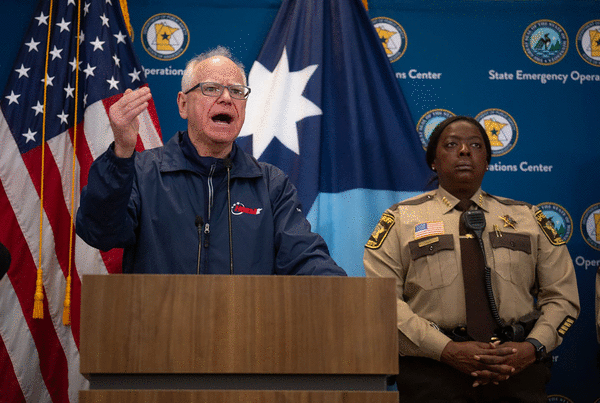
MINNEAPOLIS — Gov. Tim Walz predicted on Feb. 10 that the federal immigration enforcement surge in Minnesota could end in a matter of days, citing recent conversations with top officials in the White House.
The Democratic-Farmer-Labor governor said he spoke to both White House border official Tom Homan and President Donald Trump’s chief of staff, Susie Wiles, this week. He said federal officials have led him to believe a drawdown in federal agents is imminent.
“It’s my expectation, and we will hear more from them in the next day or so, that we are talking days, not weeks and months,” Walz said.
The federal immigration operation has disrupted life in the Twin Cities and rattled the local economy since December. Last week, the Trump administration announced it would withdraw 700 federal agents from the state. But Homan has said that if Minnesotans want to see the remaining 2,000 agents leave, activists must stop “impeding” them from doing their job. He also has said better access to immigrants in Minnesota jails is necessary to draw down Operation Metro Surge.
A spokesperson for the U.S. Department of Homeland Security, which oversees Immigration and Customs Enforcement (ICE), did not immediately respond to a request for comment.
Minneapolis Mayor Jacob Frey also met with Homan on Feb. 9, and they discussed a drawdown of federal agents in the coming weeks.
Frey described it as a positive meeting and said he’s “more and more hopeful” that the end of Operation Metro Surge is coming soon. Frey asked that federal officials set a definitive end date to the operation.
Walz said he’s emphasized to the Trump administration that there is “absolutely no upside” to continuing the operation. He cited recent polls that have shown disapproval of ICE’s actions.
“It would be my hope that Mr. Homan goes out before Friday and announces that this thing is done,” Walz said. “That would be my expectation.”
The governor said communication between the state and the federal government has improved since Homan arrived in Minnesota: “We talk daily.”
Walz made the comments alongside small business owners at a news conference to highlight the impact the operation has had on the local economy.
Patty Wall, who owns the Minneapolis food hall Market at Malcolm Yards, said the hospitality sector has become “collateral damage” in the federal immigration crackdown.
The state was told the surge of federal agents would “make Minnesota safer,” Wall said. Instead, the federal operation has created a “climate of fear reminiscent of the early months of COVID.”
Wall said many restaurants have seen their sales decline 50% to 80% since Operation Metro Surge started in December.
World Street Kitchen co-founder Saed Wadi asked Walz to consider sales tax relief for affected businesses. He said it could take three to six months for small businesses to recover.
“If they have to pay the sales tax, they might not be able to pay their rent or utilities,” Wadi said.
The governor said all options are on the table heading into the legislative session that starts next week.
_____
(Deena Winter of the Minnesota Star Tribune contributed to this story.)
_____
©2026 The Minnesota Star Tribune. Visit startribune.com. Distributed by Tribune Content Agency, LLC






Comments