Auto parts retailer Detroit Axle braced for tariff Armageddon, but it didn't come
Published in Business News


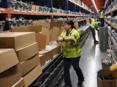

FERNDALE, Michigan — Nearing a year ago, the automotive aftermarket parts retailer Detroit Axle filed a notice with the state that the family-owned company would lay off more than 100 employees at its headquarters and warehouse here in response to increased tariffs.
The company braced for "Armageddon," said Mike Musheinesh, CEO of the business his father, who continues as chairman, began in 1989. The company had opened its first U.S. remanufacturing site in 2024 in Warren, moving production from Mexico to be closer to production and was planning for further growth in Metro Detroit. But President Donald Trump suspended by executive order the de minimis tariff exemption, which allowed goods valued at less than $800 into the country duty-free. Detroit Axle's import tax rate skyrocketed as high as 72.5% from 2.5%. It sued, calling the move unconstitutional since Congress had passed the exemption.
"The Congress has the power of the purse," Musheinesh said. "The presidency cannot raise revenue. It's not the executive branch. That's not how it works."
Armageddon, however, didn't come for Detroit Axle, which employs more than 1,000 people in the United States, Canada, Mexico, China and Jordan. Instead of laying off, the business actually has hired in Ferndale and expansion of the warehouse there is needed more than ever. Musheinesh has delayed that work because of tariffs. He had hoped to self-finance the building, but he likely will have to take out a loan.
Detroit Axle increased prices by 15% at a minimum on the retail value, propelling revenues to a record $430 million, up from $330 million in 2024. Profitability, however, has tanked by about 80%, Musheinesh said.
Detroit Axle also took measures to reduce costs, including installing some more automation like conveyer belts. Detroit Axle tried looking to other sources for parts like India and Malaysia, but found higher prices, insufficient supply chains and scale, and inconsistent quality not to be a worthwhile exchange. Detroit Axle also expanded business in Mexico and entered into Canada.
Meanwhile, tariffs got the better of some other competitors who weren't as well-positioned financially or who cut back on imported product lines. Detroit Axle scooped up their business, but the situation has left consumers with fewer options.
"It's a market of who can survive now," Musheinesh said. "It's not a market of who can thrive."
Nonetheless, Musheinesh is continuing his legal battle. When the U.S. Supreme Court in February determined the president didn't have the authority under the International Emergency Economic Powers Act to institute certain tariffs that Trump had such as those announced on last year's "Liberation Day," it didn't make a determination on the de minimis exemption suspension, though it did lower tariffs for Detroit Axle to as high as 52.5% from 72.5%, Musheinesh said. The decision prompted the U.S. Court of International Trade in March to reopen Detroit Axle's case.
The Detroit News sent a request for comment on the case to the White House.
Section 321 of the Tariff Act of 1930 features the de minimis exemption, allowing the U.S. Treasury Secretary to waive certain duties on certain low-value imports. Citing efforts to stop fentanyl trafficking, boost domestic manufacturing and close an "unfair" trade loophole, Trump signed an executive order in May suspending the provision for China, which then, in August, was expanded to all nations.
"It seems like, one, that was used for smuggling contraband," said Adam Hersh, a Washington, D.C., economist who formerly worked at the Economic Policy Institute think tank, "so they have cracked down on that a lot, not just drugs, but other things. Two, the big Chinese retail companies that do direct shipping avoid paying tariffs, or other companies like if you trade on the Amazon marketplace to import it and warehouse in the U.S., the Temus and Sheins and things like that, were big beneficiaries of de minimis."
Economic researchers from Yale University and the University of California, Los Angeles, however, also have found de minimis-exempted goods represent a larger share of purchases of lower-income communities than higher-income zip codes and that their elimination disproportionality raises their cost of living.
Congress last summer in the One Big Beautiful Bill Act did vote to eliminate the de minimis exemption, but the effective date for that isn't until July 1, 2027.
"Even Congress gives you a runway: 'OK, you've made investments in infrastructure in a place to utilize de minimis. We understand that, and we're going to give you X amount of time for you to pivot,'" Musheinesh said. "OK, I understand. That's how it goes. Yeah, you voted in, you voted out. But how do you come in, Mr. President, and you just claim an emergency and just wipe it off the code with the executive order? That's not the way it's done."
Almost 1.4 billion packages entered the country under de minimis in 2024, according to U.S. Customs and Border Protection. The agency in December said it had collected more than $1 billion in tariffs on more than 246 million of such low-cost shipments since the suspension took effect.
Major concerns within the U.S. automotive industry abound over the growth of Chinese vehicle brands globally and their low-cost, high-tech products. Tariffs, however, can't fully protect U.S. manufacturers, Musheinesh said.
"Do we compete by having a big brother protect us?" he said. "What are they gonna do? Protect us throughout the world, and make every country put tariffs on? Why don't you help us by letting us be able to grow our manufacturing here?"
In addition to expanding the Ferndale warehouse with an additional 350,000 square feet next door, which he estimates would have created about 300 new jobs and additional capacity at Detroit Axle's Warren plant, where it employs about 250 people, the company also wants to get into molding and casting.
"How do you do that now, when in 2024, you paid $12.5 million in tariffs," Musheinesh said, "and in the last 12 months here, you're over $80 million or $90 million in tariffs?"
If the court grants the injunction that Detroit Axle is requesting, Musheinesh said he could lower prices, boost sales and profitability, and invest more and create more jobs in Metro Detroit. If it doesn't, Detroit Axle hopes to survive until another administration enters and can reinstate the policy.
Regarding Liberation Day and Trump's tariff policy, "it liberated my bank account," Musheinesh said. "I see it as a grave economic mistake."
Musheinesh said he's fighting also out of love for the country and the Constitution. Emigrating from Palestine as a child, he grew up living above a party store in southwest Detroit. He left school in the 10th grade to join his father at the business.
"I was born as a refugee in a different country," he said, "and now I'm suing the greatest power on Earth, where is that ever found in human history?"
©2026 www.detroitnews.com. Visit at detroitnews.com. Distributed by Tribune Content Agency, LLC.








Comments