Auto review: On the town in the sci-fi, low-mi Hyundai Ioniq 9 EV
Published in Business News





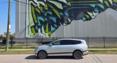
DETROIT — The striking, three-row Hyundai Ioniq 9 is an avatar for the electric niche.
I flogged the Ioniq 9 all over Metro Detroit — the 300-mile, natural radius of an EV — as I helped chaperone a racquets tournament and performed daily chores. From its sci-fi, "Blade Runner" exterior to its posh white interior, the Ioniq is dressed to, well, the nines with a serene elegance that is a match for an $80K Lincoln Aviator.
But with real-world range of only 249 miles (80% charge at a fast charger), it cannot match the dexterity of its $50K, gas-powered, 418-mile-range, three-row Hyundai Palisade peer that is a finalist for 2026 North American Utility of the Year. Use your vehicle locally and fly for business/family trips? Are you retired and enjoy relaxed road trips? Wowed by Hyundai’s new, sci-fi image? The Ioniq 9 is a luxury vehicle for you.
If you need a more versatile family vehicle, buy a gas-fired Palisade or Aviator.
I tested a $79,540 Ioniq 9 Performance Calligraphy model a week after completing a 15-hour, four-day round trip to Watkins Glen, New York, in a 418-mile-range, gas-powered, $51,110 Palisade XRT Pro. Palisade made the trip with one five-minute drink of fuel. Had I been driving the Ioniq 9, I would have required more than an hour over three charging stops — not to mention more time in the charger-starved Finger Lakes, where neither my hotel nor my destination — Watkins Glen International Raceway — were equipped with 220-volt overnight chargers.
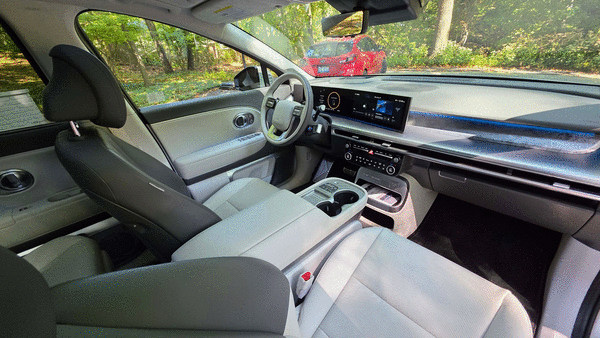
The layouts of the Palisade and Ioniq 9 are the same with roomy, three-row interiors studded with gorgeous dual-screen dashes, comfortable seats, high-tech features and USB-C ports everywhere. Ergonomically thoughtful controls are expertly placed on the steering wheel for ease of use. The shifter alone is a masterpiece that frees up console space by harboring both START button and gear selector.
Then Ioniq 9 adds another $30K of sweets.
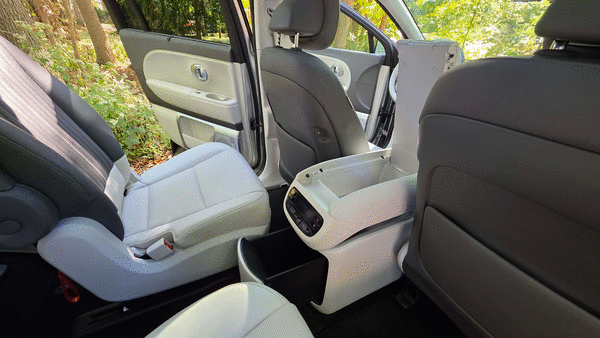
Think white leather that wraps the interior like icing on a wedding cake. White steering wheel, white seats, white console. The duo-tone interior is trimmed with gray bits: for example, seatbacks split by a line up the middle. Silver bezels and door handles are tastefully placed ‘round the cabin for added decoration. The interior reminded me of a Lincoln Aviator I piloted in 2020, which boasted similar interior appointments from a brand synonymous with quiet luxury.
“This is niiiice,” said a visiting racquets player slipping into the Ioniq 9’s second row. My third-row passenger was not as impressed, especially when I fumbled the controls.
“I’m getting crushed!” he said as I mistakenly pressed the automatic rear seat button to fold the rear seat (with him in it) into the floor. Sometimes a simple pull-loop in the seatback works better. And quicker.
Once their chauffeur (me) had figured out the controls, five passengers arrived at Adaline Restaurant on Woodward in quiet luxury. Ioniq 9’s electric drivetrain is a treat in stop-and-go urban environment.
Heading down Jefferson Avenue, my 5,900-pound chariot squirted ahead of traffic to make a Michigan Turn. “IndyCars go 180 mph down these west-bound Jefferson lanes at the Detroit Grand Prix,” I informed my guests.
Ioniq 9 won’t go that quick, but its 4.4-second vault to 60 mph is impressive for a three-ton ute. Better yet, the power it delivered was linear, quiet, mannered. No gear shifts, no downshift hiccups from a multi-speed transmission. The Hyundai does have steering wheel paddles — but they are to adjust electric motor regenerative braking, not gear shifts. I preferred Level 4 regen (to the harsher MAX setting), which allowed the SUV to slow to a stop without me ever touching the brake.
“That was a smooth ride,” commented a passenger, emerging to take a slow walk around the car curbside.
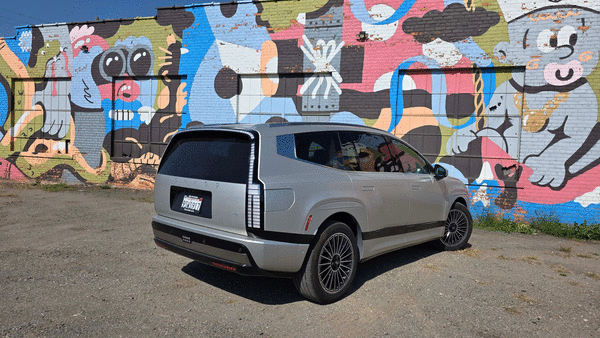
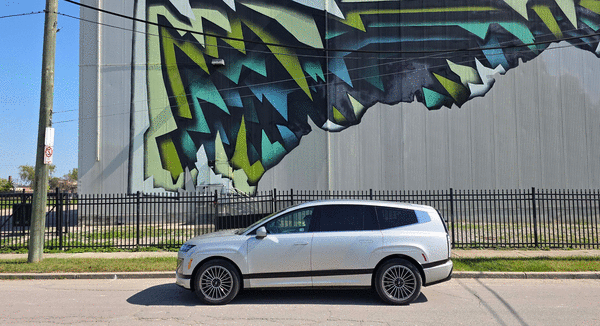
I first saw the Ioniq 9 at the famed Goldstein House overlooking Beverly Hills at its November 2024 Los Angeles Auto Show debut. A distinctive architecture for a distinctive car. The Ioniq 9 is no less a standout in downtown Detroit traffic. That "Blade Runner" rear is its signature, but the fascia is memorable for its wraparound headlights punctuated by pixel LED blocks and vertical, pixel-block headlights.
Sitting on big, 21-inch, low-profile wheels, it’s more space age than the handsome, rugged design of its sister Palisade XRT Pro, which drives on high-profile, all-terrain tires.
Ioniq 9 is a Concorde, the Palisade a Boeing 737 airliner. And not just because Ioniq is more posh.
Yes, it’s spectacularly outfitted with luxuries like self-park assist, automatic panoramic roof, head-up display and programmable massaging seats. But it’s also oddly fragile due to the limits of EVs.
I have two chargers in my garage: a NACS charger for Tesla and a Juicebox J1772 connector for everything else. The NACS-equipped Hyundai should be able to charge on both (a J1772 connector is in the trunk). The Ioniq 9 worked on the Juicebox with the adapter, but not the Tesla charger, because it wasn’t a current-generation NACS.
Unlike just a few years ago, there are chargers everywhere in Oakland County. But the charger world has a language all its own.
When I searched for a nearby charger in the Ioniq 9’s screen, a blizzard of options came up from 350 kW to 150 kW to 50 kW at multiple locations. With a packed schedule, I didn’t have time to wait at an occupied charger (unlike a gas pump where customers cycle through in minutes). Helpfully, Ioniq 9’s software showed me the number of charging stalls at each location. I picked the one with the most (four, at a BP gas station in Southfield) — compared to a closer, smaller charger at a Ford dealer.
Upon arrival, I discovered the BP actually had eight charging stalls. Only one was occupied, and I plugged in for 25 minutes to go from 22% of charge to 80%. That is 63 miles to 277 miles — a top-up that would take three minutes in a gas car.
I used the 25 minutes to shop for a newspaper, buy Snapple and check email.
The cost for this inconvenience was 49 cents per kWh, which is about the same cost for 214 miles ($35) of regular gas at $3.10 a gallon. But it takes five times longer. That inconvenience multiplies on road trips.
The trip to Watkins Glen? It would take 1.25 hours longer than a gas-powered Palisade (or comparably priced Lincoln Aviator). Not to mention anxiety upon arrival about where to charge or how weather conditions might affect range.
No wonder Lincoln has scaled back its plans to go all-electric and instead is making the three-row, V6-powered, 480-mile-range, instant-fill-up Aviator.
The Korean automaker, on the other hand, is determined to change its image. Gas-powered Palisade or luxe Ioniq 9 EV?
2026 Hyundai Ioniq 9
Vehicle type: Battery-powered, rear or all-wheel-drive, six-or-seven-passenger SUV
Price: $60,555, including $1,600 destination fee ($79,540 Sport 3 AWD as tested)
Powerplant: 110.3 kWh lithium-ion battery with single rear or dual electric-motor drive
Power: 215-422 horsepower, 258-516 pound-feet torque (422 horsepower, 516 torque as tested)
Transmission: Single-speed direct drive
Performance: 0-60 mph, 4.4 seconds (Car and Driver); top speed, 129 mph; towing, up to 5,000 pounds
Weight: 6,034 pounds (as tested)
Fuel economy: EPA MPGe 85-92; range, 311 (AWD) to 335 (RWD) miles
Report card
Highs: Sci-fi design, acceleration, Tesla-like NACS charging port
Lows: ICE peer sports similar tech, better range; NACS doesn’t work on all Tesla chargers
Overall: 3 stars
____
©2025 www.detroitnews.com. Visit at detroitnews.com. Distributed by Tribune Content Agency, LLC.










Comments